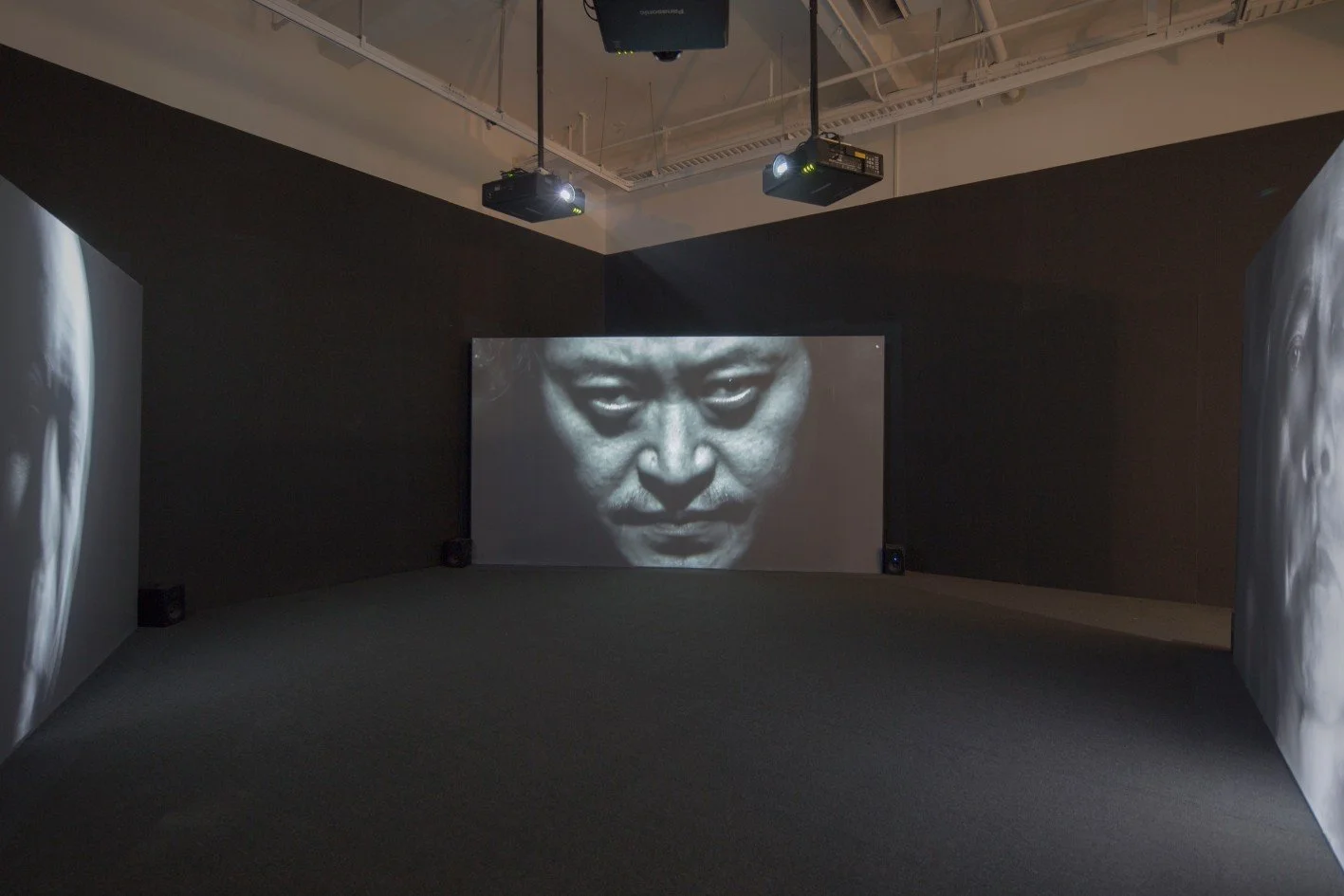
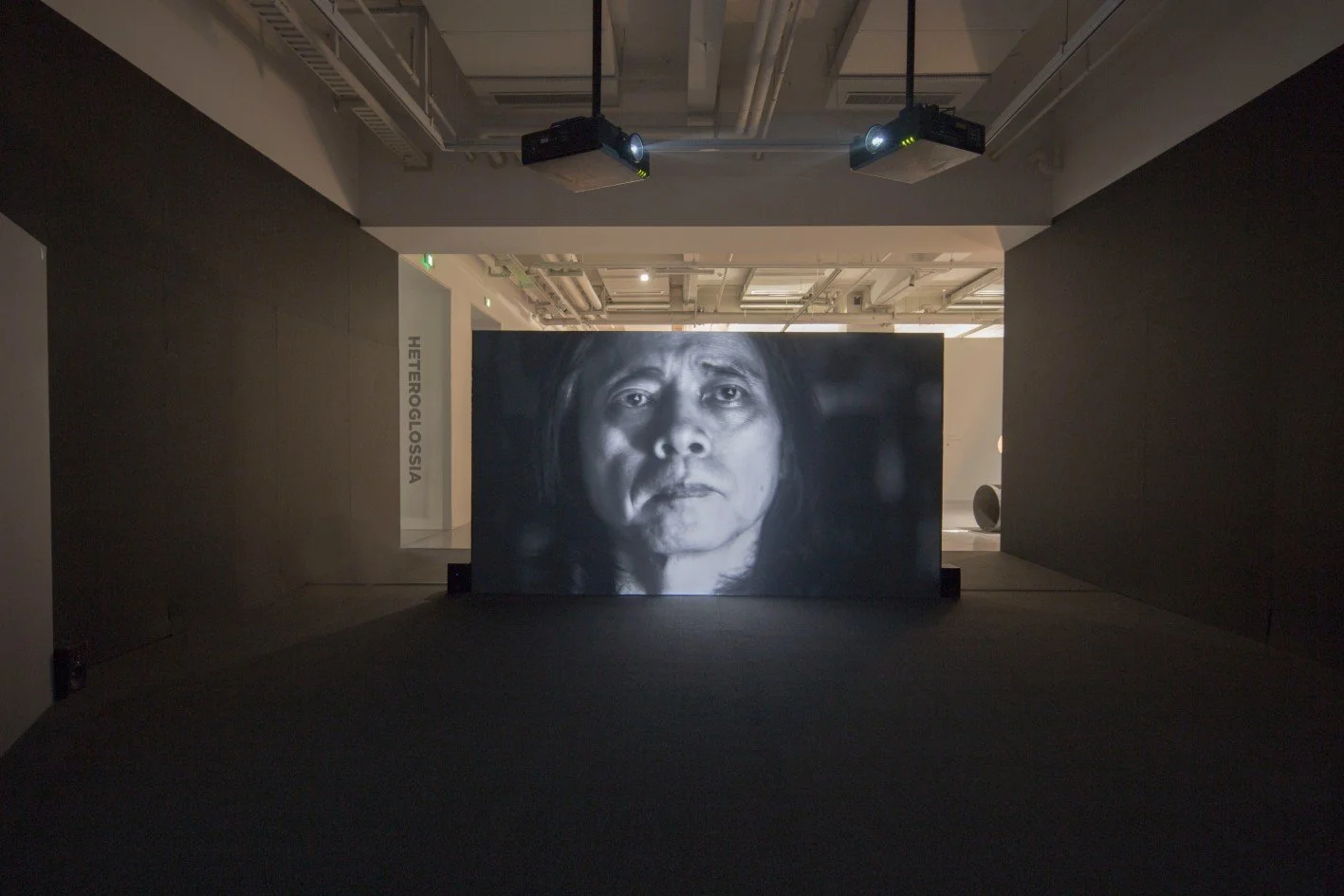
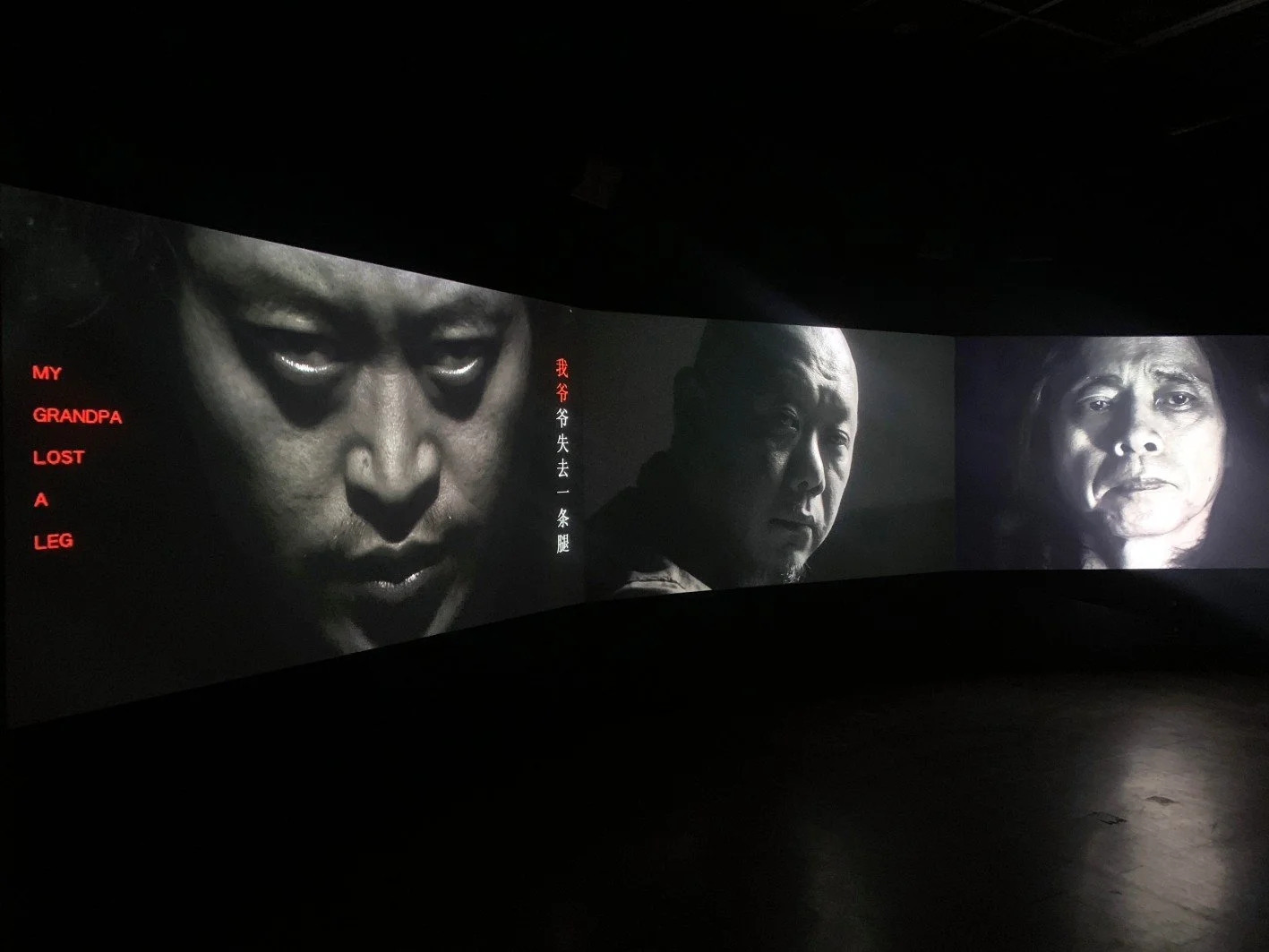
宣傳三部曲 / 三頻道錄像 / 10m02s / 2018
Propaganda Trilogy / 3 channels video installation / 10m02s / 2018
“宣傳三部曲”為三頻道錄像裝置,取材自不同歷史時期與政權下的政治宣傳歌曲,探討國族敘事與集體記憶的操演。首段”兩百年“引用1975年美國電影”Nashville”中的愛國歌曲,其重複的旋律在當代語境中產生歷史錯置感,特別在當前中國崛起、民族主義高漲之際,更顯矛盾。第二段”榮譽的軍伕“重構日治時期台灣”雨夜花”被改編為軍國進行曲之歷史,透過韓語詮釋強化殖民經驗間的異質性。第三段”台灣同胞我的骨肉兄弟“聚焦冷戰時期中國以音樂宣傳解放台灣的敘事,其親切旋律與戰鬥語言交錯,暴露了政治情感的建構邏輯。全作以歌曲為核心媒介,呈現敵對意識形態中的情感共通性與歷史的荒謬辯證。
Propaganda Trilogy is a three-channel video installation that draws upon political propaganda songs from different historical periods and regimes, examining how national narratives and collective memory are constructed and mobilized. The first segment ”200 years“ references a patriotic song from Robert Altman’s 1975 film “Nashville”, whose repetitive melody—linking Christian devotion with national loyalty—acquires a sense of historical dislocation when heard in today’s geopolitical context, particularly amid China’s rise and resurgent nationalism. The second segment “An Honorable Imperial Service Man” reimagines the Taiwanese popular song “Rainy Night Flower”, which was repurposed during Japanese colonial rule into a military march to recruit unarmed Taiwanese laborers for the imperial army. Sung in Korean, the piece underscores the divergent interpretations of shared colonial experiences. The third segment ”Compatriots of Taiwan, my Blood Brothers” focuses on a Cold War-era Chinese anthem advocating for the “liberation of Taiwan,” in which sweet, pastoral melodies give way to militant rhetoric—revealing the performative and contradictory logic of ideological persuasion. Centered around the medium of song, the trilogy highlights the paradox of emotional resonance across opposing political systems, and reflects on the absurdities of history’s ideological constructs.
兩百年”原為Robert Altman的1975年電影大作”Nashville”裡
的配樂
原唱 / 作曲: Henry Gibson
中文歌詞改編:彭弘智 / 小河
表演:小河
拍攝/燈光/剪接 / 收音:彭弘智
英文翻譯:周貞徵 / 姬蓮
”榮譽的軍伕“ 原曲為鄧雨賢的“雨夜花” 台灣日治時代日本人將這首歌曲改為鼓勵台灣人民響應「聖戰」(第二次世界大戰)的進行曲《榮譽的軍夫》(譽れの軍夫),栗原白也作詞、霧島昇演唱,用來鼓舞台灣人踴躍去做日軍的軍夫
原作詞: 周添旺
演唱 / 吉他:Kim Master
拍攝/燈光/剪接 / 收音:彭弘智
韓文翻譯:韓禮安
“台灣同胞我的骨肉兄弟“是1972年由于宗信作詞、覃鑷邦作曲、吳雁澤首唱的聲樂作品,創作於瀋陽軍區前進歌舞團工作期間。原曲名《祖國領土台灣島》,後根據葉劍英元帥講話精神更名,以第一人稱視角抒發對台灣同胞的思念及國家統一願景
演唱 :林文俊
鋼琴伴奏:康信安
拍攝/燈光/剪接 / 收音:彭弘智
日文翻譯 / 發音矯正:池田リリィ茜藍
“200 Years”, Originally a musical piece from Robert Altman’s 1975 landmark film Nashville
Original performance / composition: Henry Gibson
Chinese lyrics adaptation: Hung-Chih Pengi / Xiao He
Performance: Xiao He
Cinematography / Lighting / Editing / Sound Recording: Hung-Chih Peng
English translation: Jenny C. Chou / Jillian Schultz
“An Honorable Imperial Service Man”, the original melody is “Rainy Night Flower” by Teng Yu-hsien. During the Japanese colonial period in Taiwan, this song was adapted by the Japanese authorities into a march titled “An Honorable Imperial Service Man” (誉れの軍夫). With lyrics by Kurihara Shiroya and performed by Kirishima Noboru, the song was used to encourage Taiwanese people to participate as military porters in support of Japan’s so-called “Holy War” (World War II).
Original lyrics: Chiu Thiam-ōng
Vocal / Guitar: Kim Master
Cinematography / Lighting / Editing / Sound Recording: Hung-Chih Peng
Korean translation: Han Lian
“Compatriots of Taiwan, my Blood Brothers”, this vocal work was written in 1972, with lyrics by Yu Zong-Xin, music composed by Qin Nie-Bang, and first performed by Wu Yan-Ze. It was created during the composers’ tenure at the Forward Song and Dance Troupe of the Shenyang Military Region. The original title was “Taiwan Island, Territory of the Motherland”, later renamed in accordance with the spirit of a speech by Marshal Ye Jianying. Written in the first-person perspective, the work expresses longing for Taiwanese compatriots and articulates a vision of national reunification.
Vocal: Lin Wen Chun
Piano accompaniment: Alan Kan
Cinematography / Lighting / Editing / Sound Recording: Hung-Chih Peng
Japanese translation / Pronunciation coaching: Ikeda Lily Chenran