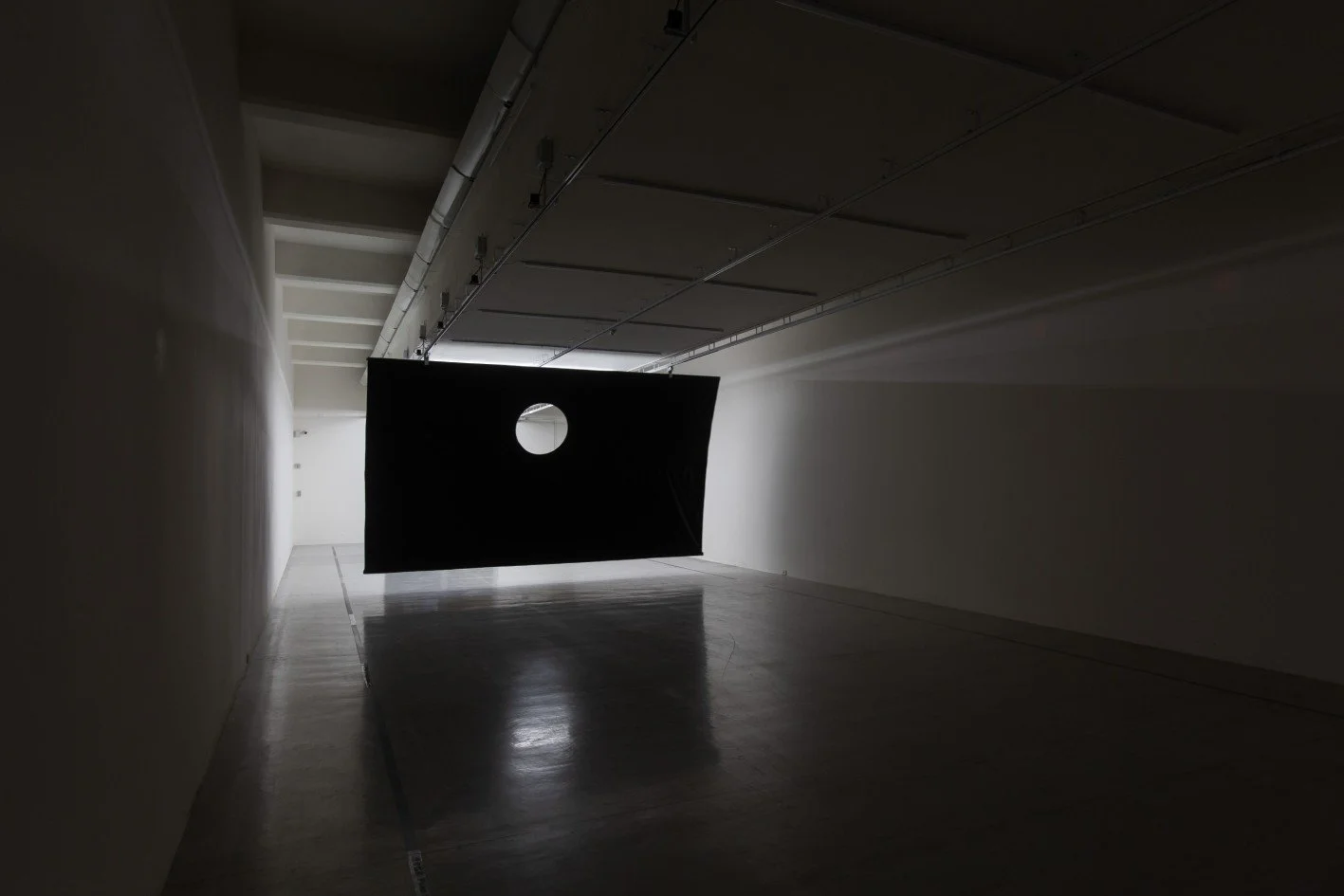
會飛的牆 The Flying Wall / Mechanical Installation / 2025 / Variable dimensions

開光的吊燈 Consecrated Chandelier / 2024 / approx. 200x310x480H cm / Mechanical Installation
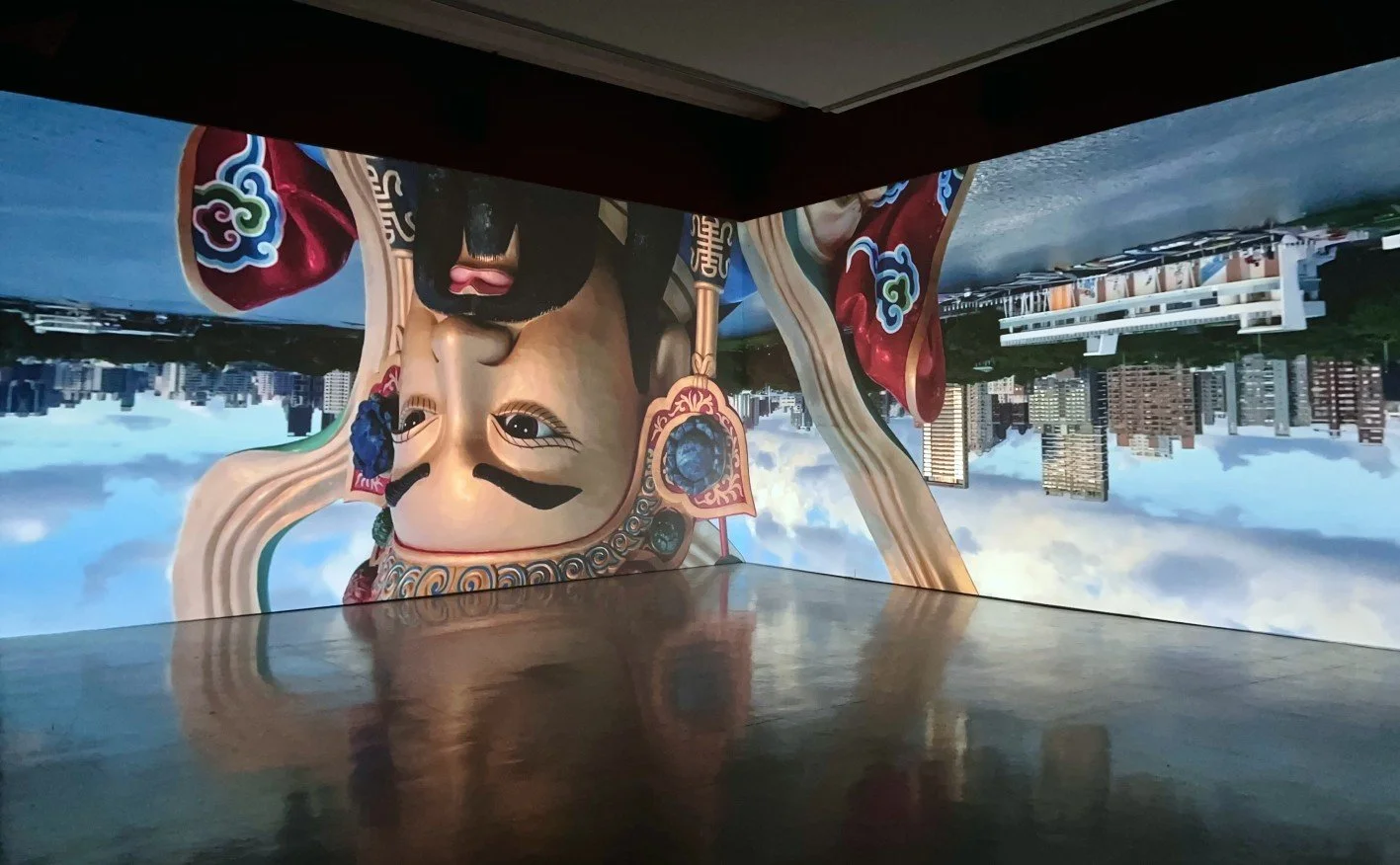
未完成之作 Psychic Theater / 2025 / 2 Video Projections / 93m26s
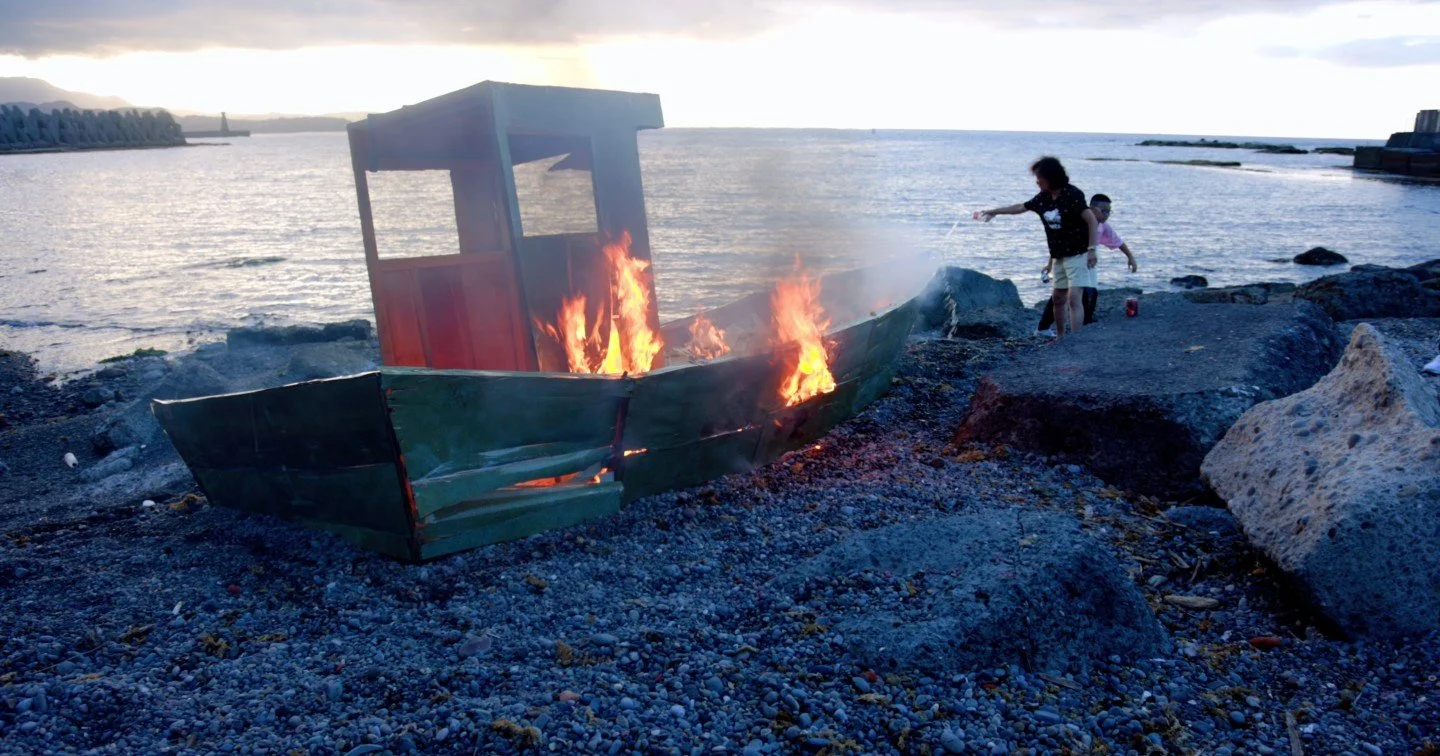
“正義路安魂曲“ 第二樂章:港都夜雨 “Justice Road Requiem” Second Movement: Night Rain in the Harbor City / Digital Film and Installation / Dimensions variable/ 2024
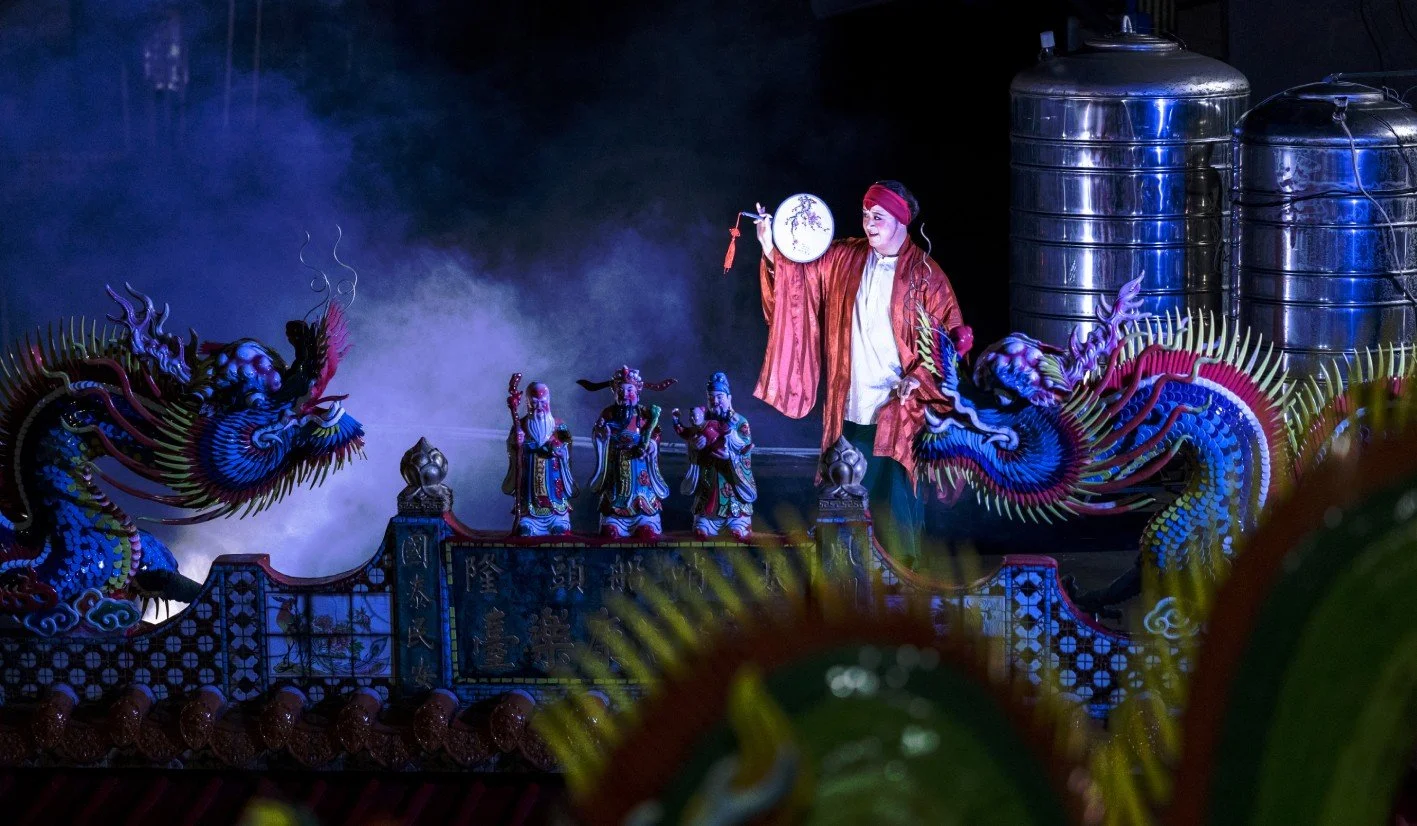
”正義路安魂曲“ 第一樂章:觀音腳下 “Jusutice Road Requiem” First Movement: At the Foot of Guanyin / Single-channel video, live performance / 2022
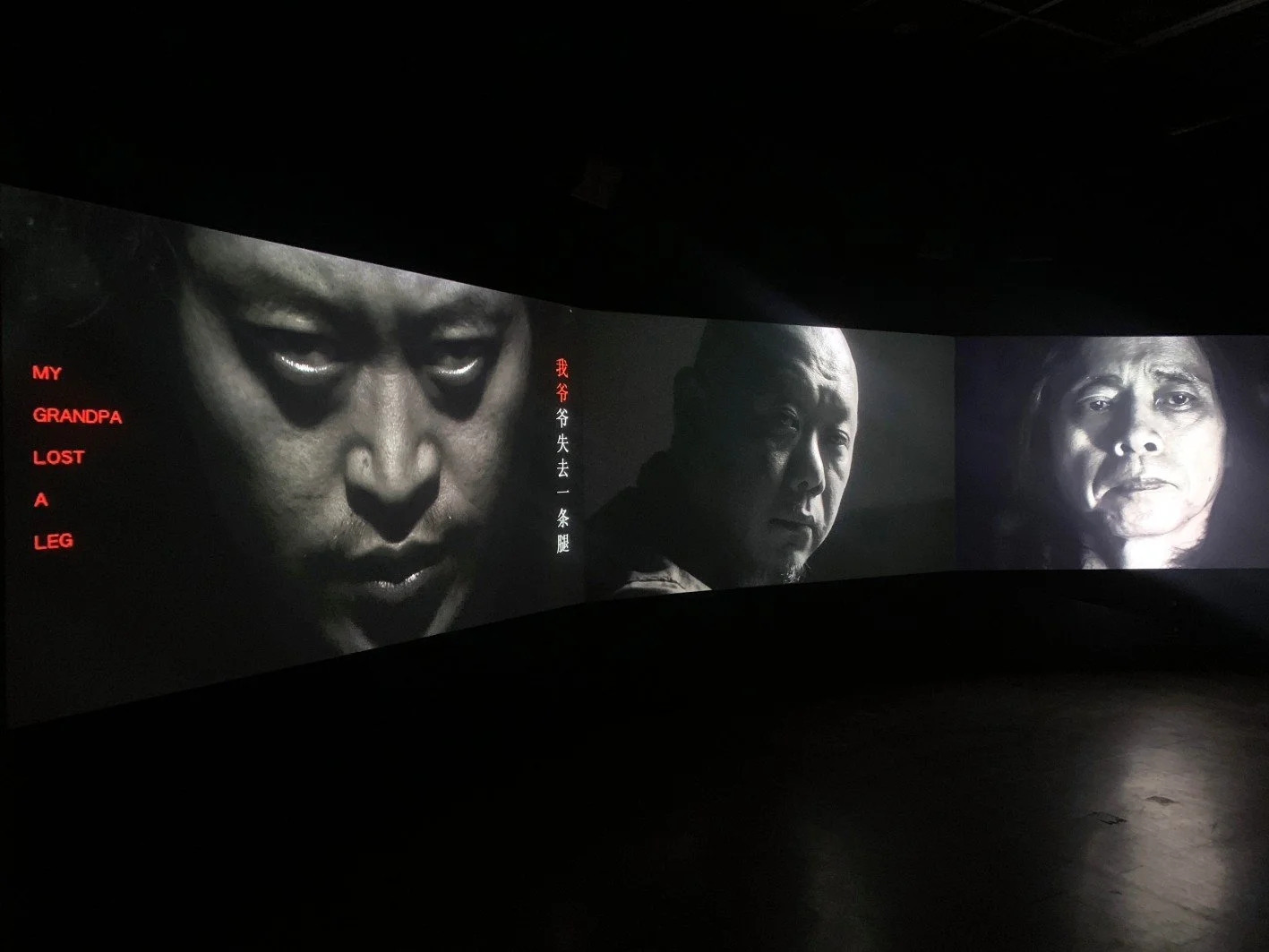
宣傳三部曲 Propaganda Trilogy / 3 channels video installation / 10m02s / 2018
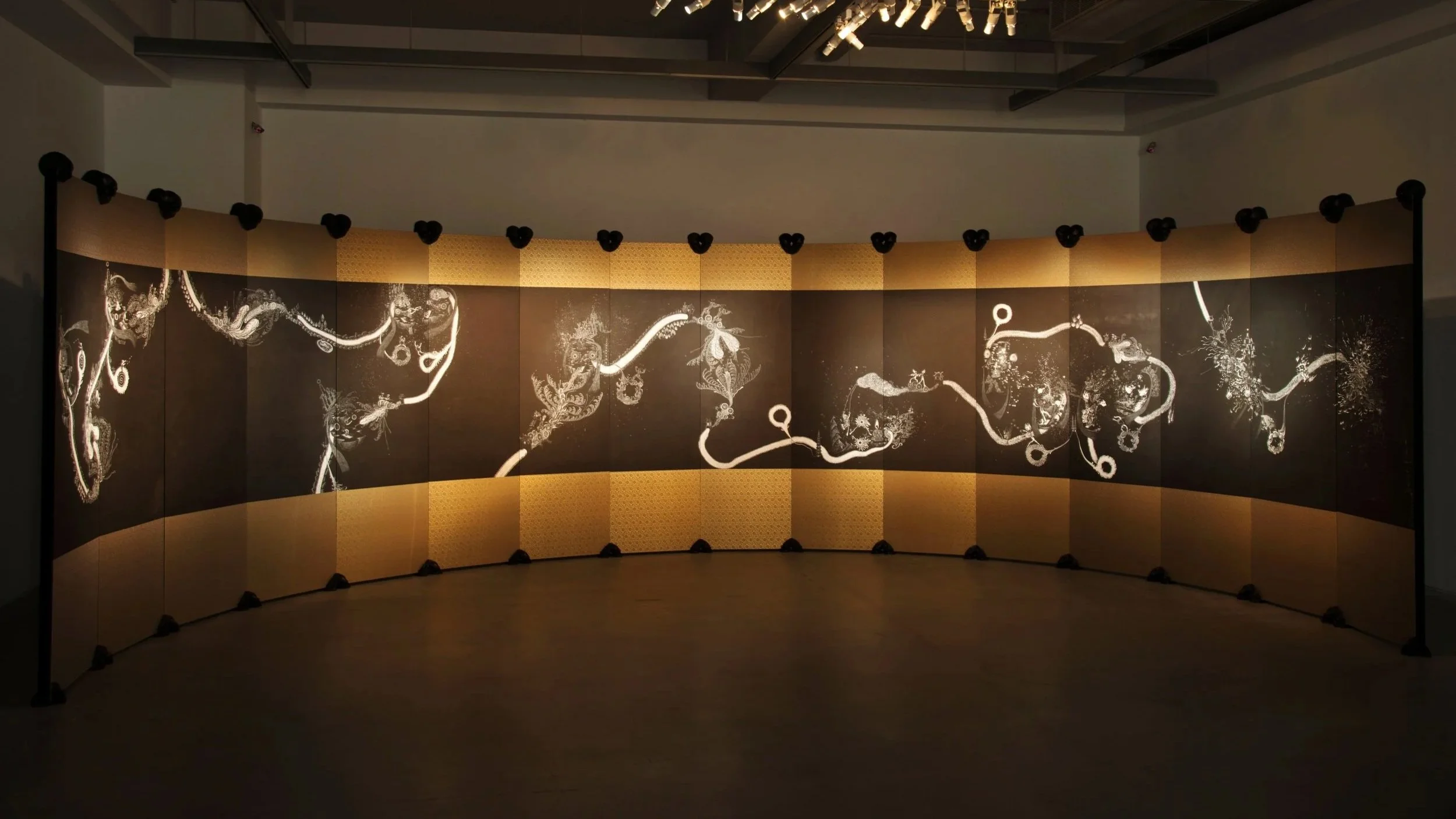
內經圖變奏曲 The Variation of the Inner-Scripture / Acrylic on Chinese paper mounted on board, 3D printings / 231 x70 x 5cm x 16pc. / 2005-2018
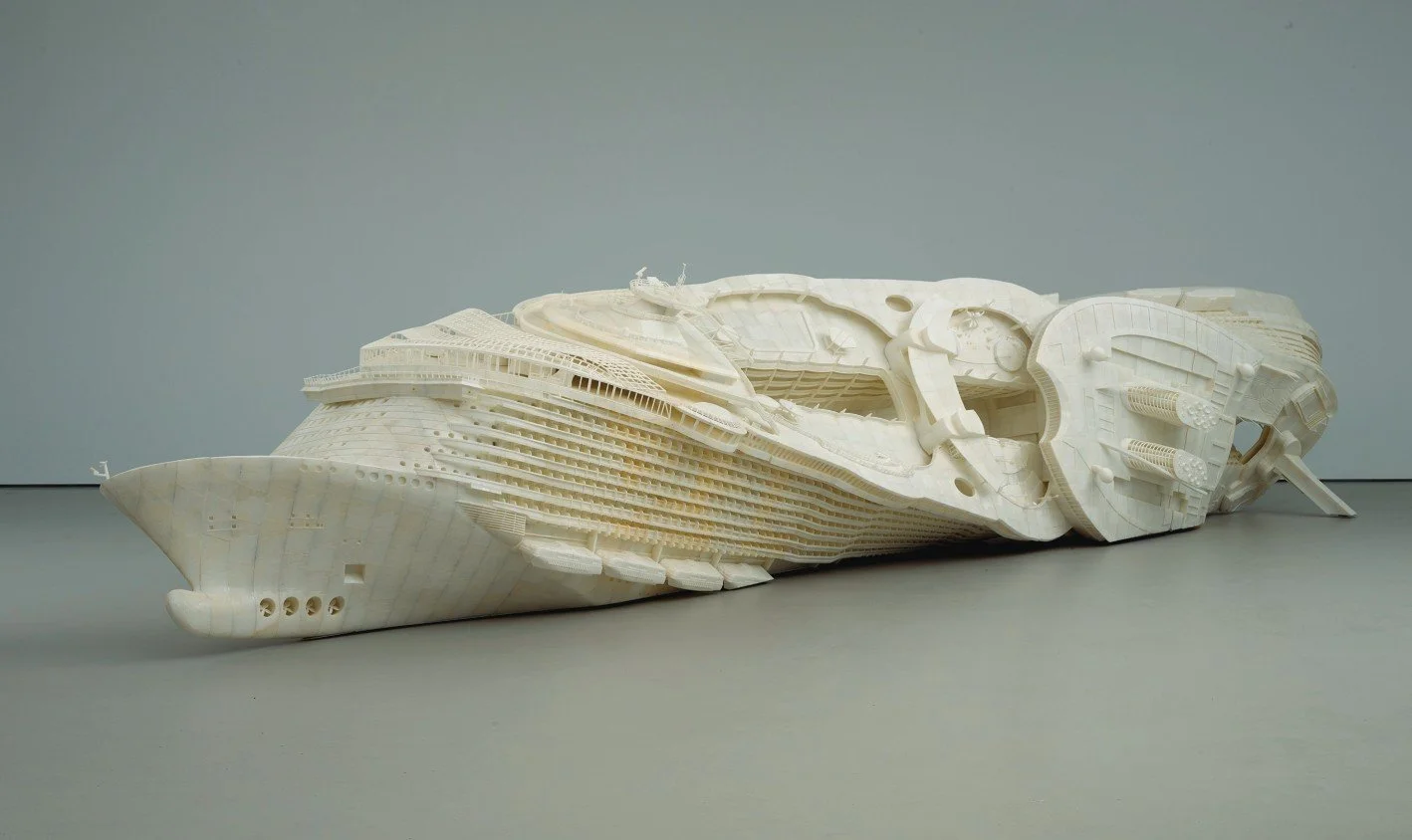
大洪水-諾亞方舟計劃 The Deluge – Noah’s Ark / 3D printings / 800x180x184H cm / 2014
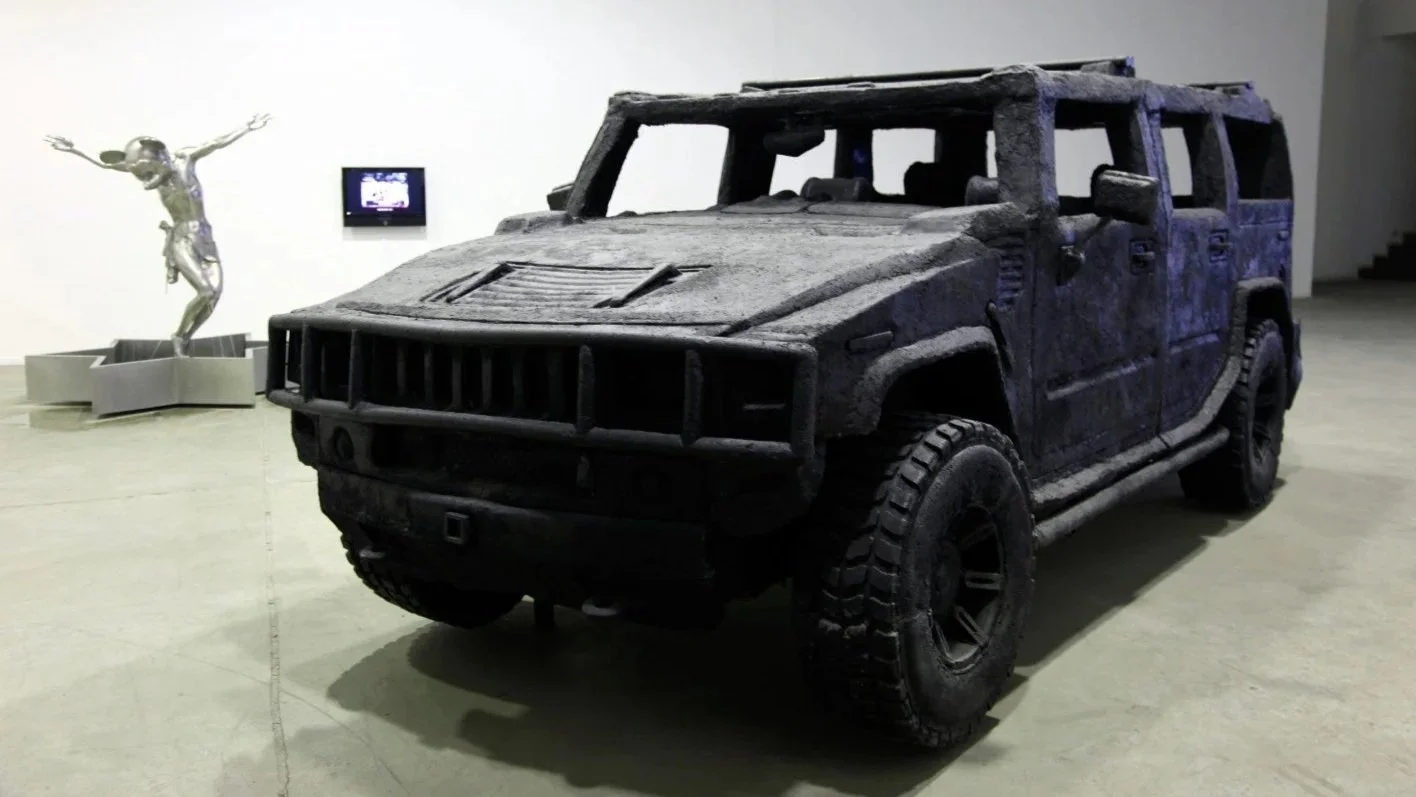
煤炭做的悍馬 Hummer Made of Coal / Coal, Fiber Glass, Metal Frame / 200(H)×230(W)×480(L)cm / 2009
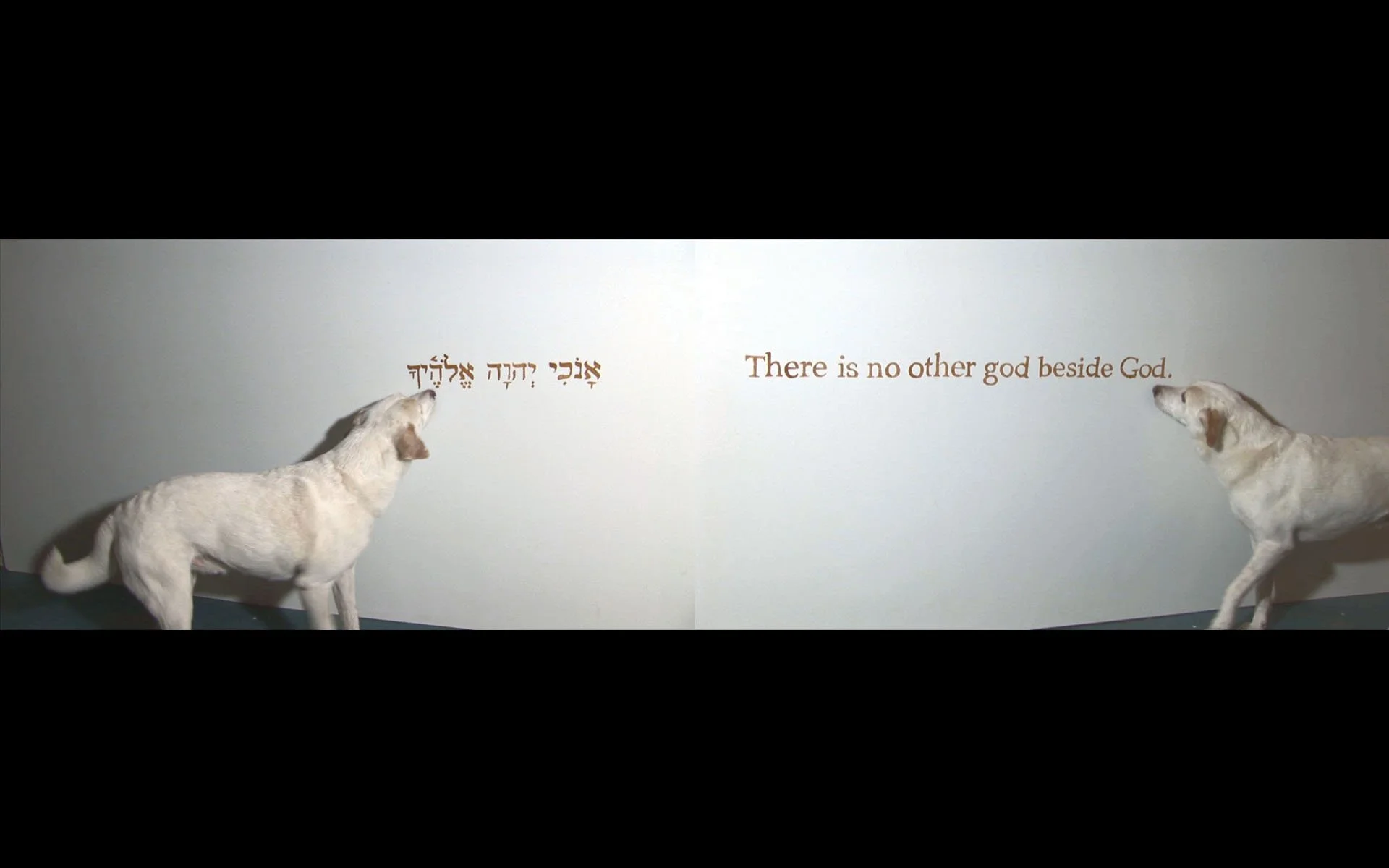
十誡及伊斯蘭註解 10 Commandments and Islamic Exegesis / 2 Channel HD Videos 05m34s / 2007
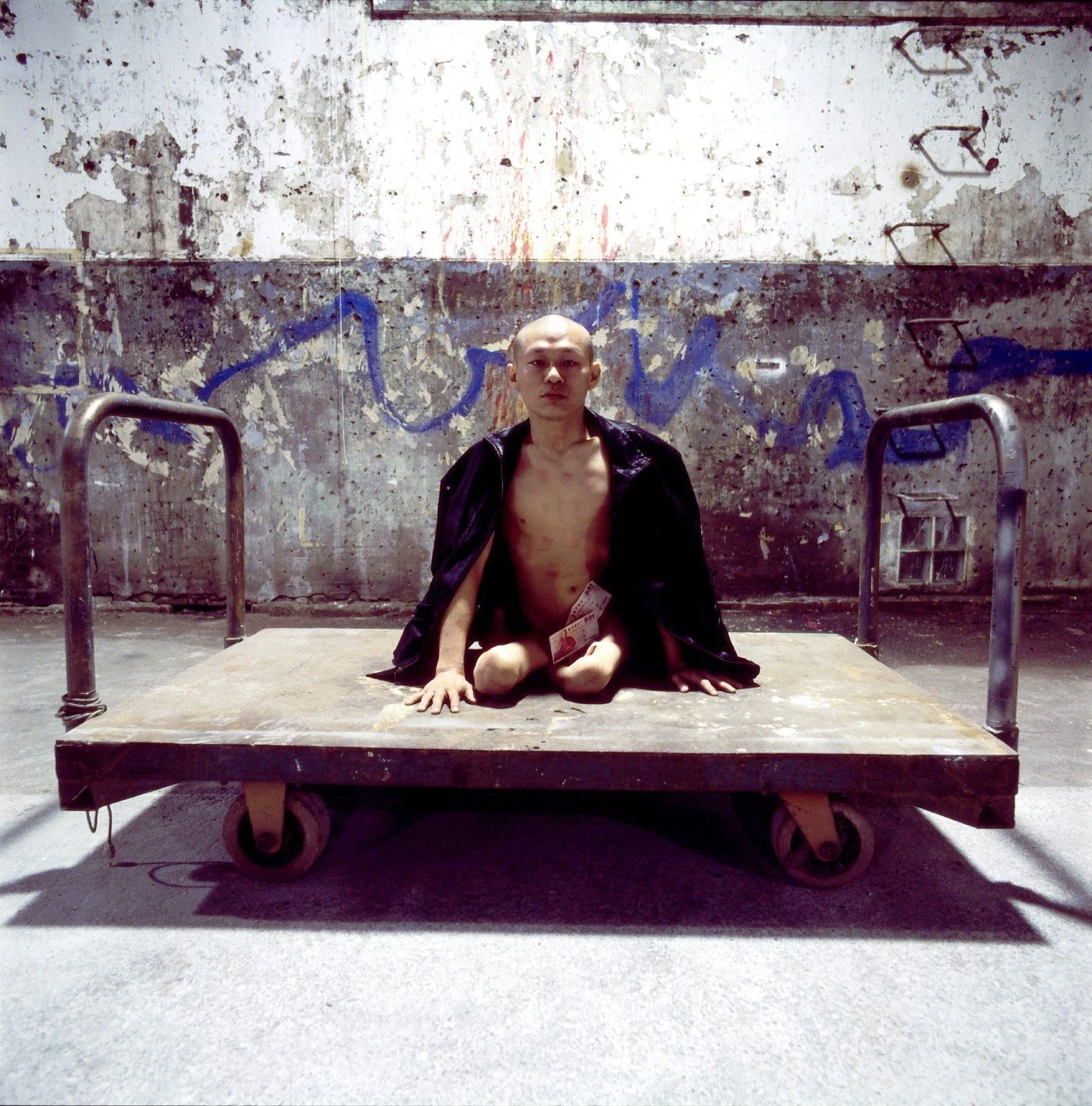
搶錢計畫 Taking Money Project-1 / 2 digital c-prints, one video / 115x115 cm, 9m16s / 2004
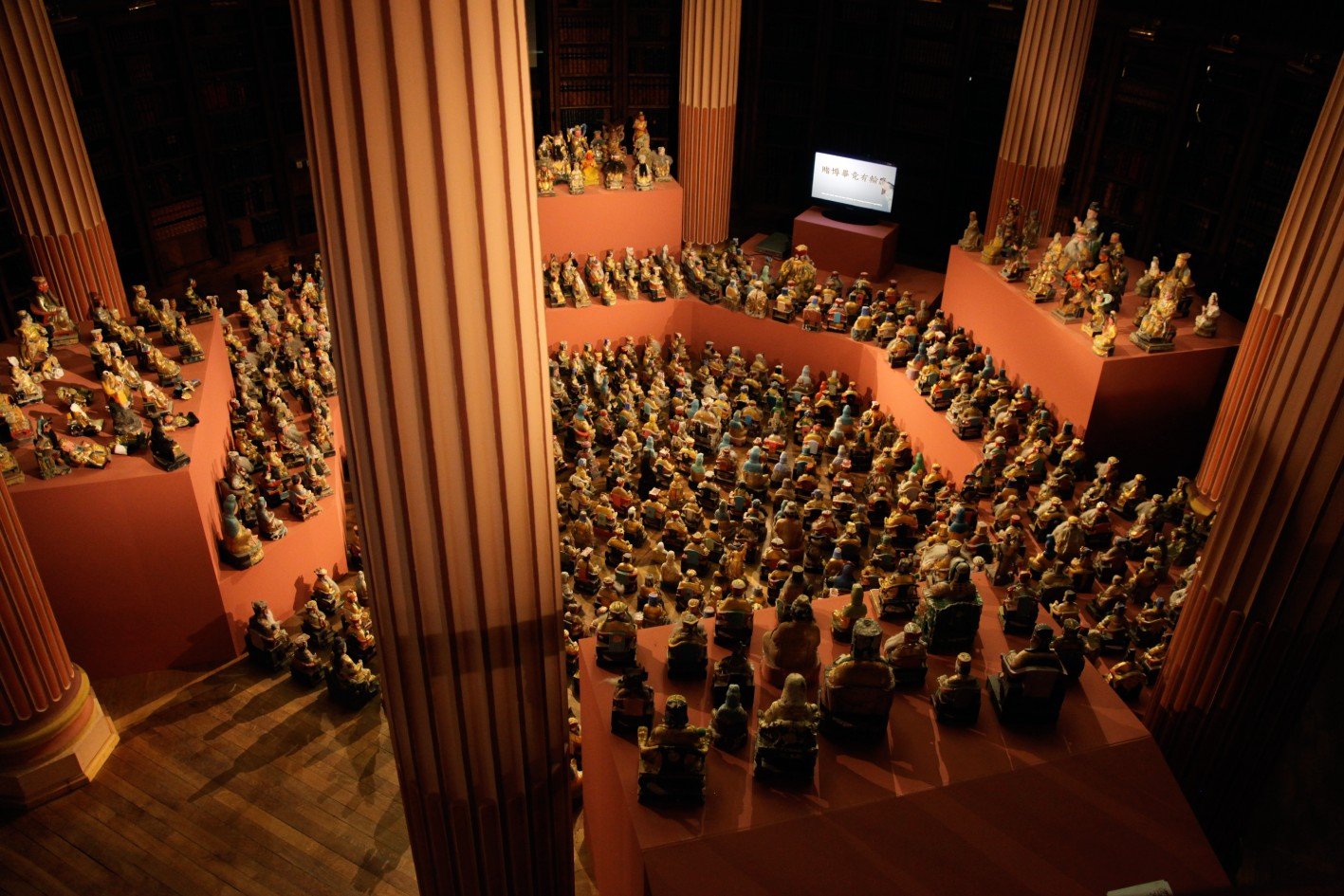
神明收容所 God Pound / abandoned statues and one Single Channel video “The Chronicle of the Misfortune Deities” / Various dimension / 2006
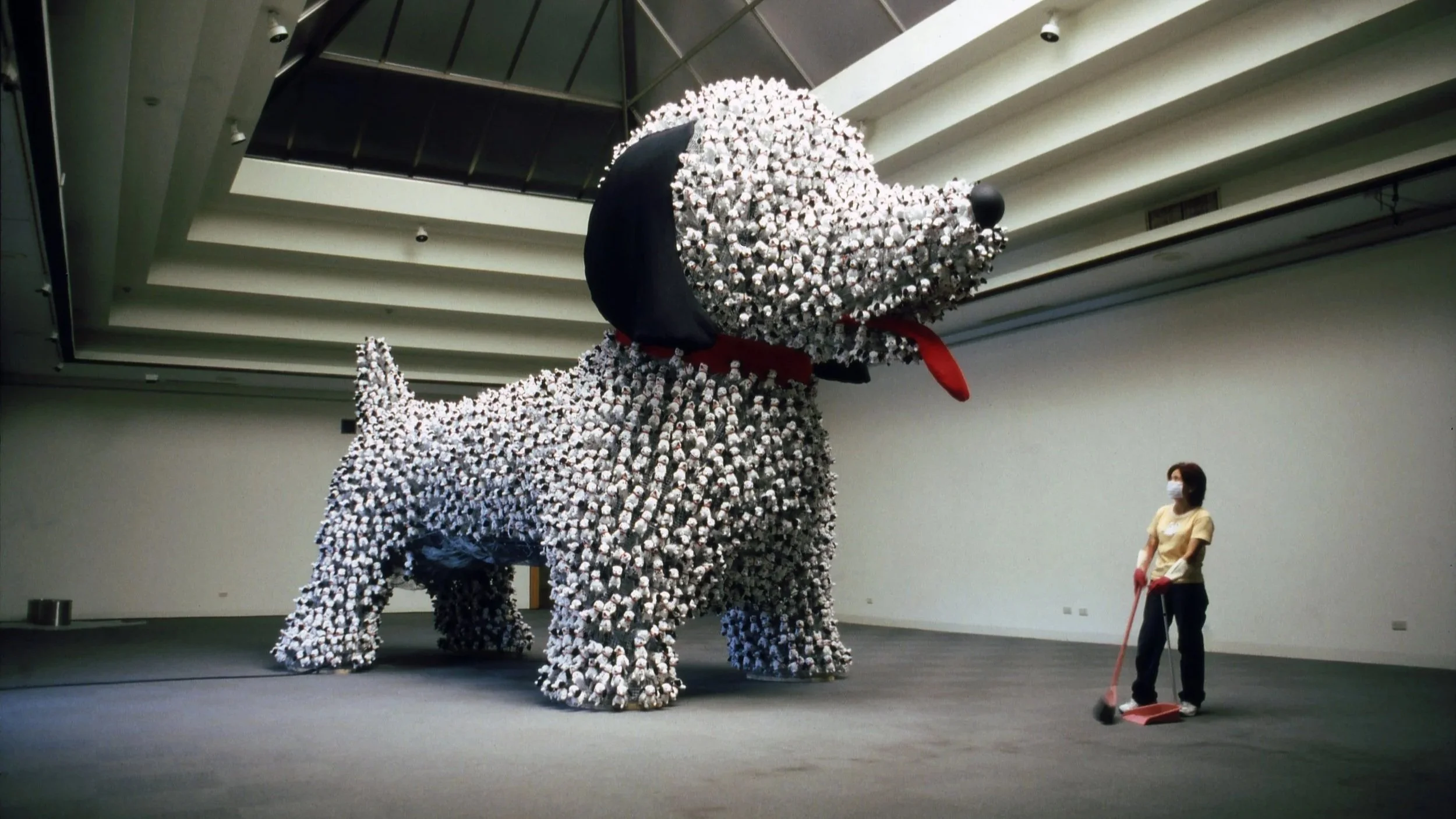
小丹尼-奧地利製造 Little Danny - Made in Austria / 3000 dog toys, metal, power supply, censor. / 430x810x216cm / 2002
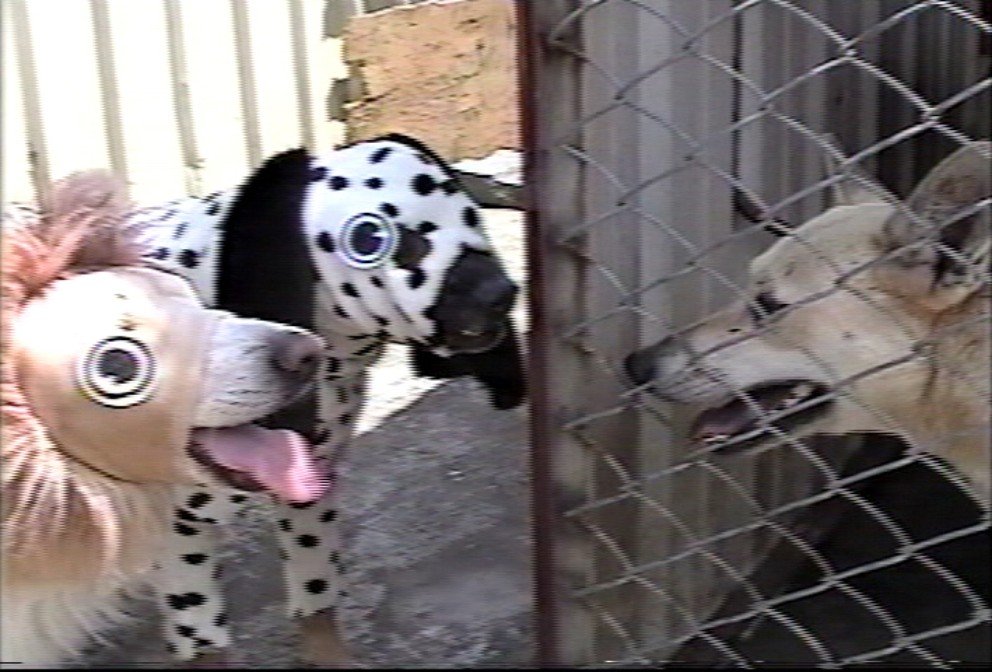
衣錦還鄉-5 Returning Home in Splendor-5/ single channel video / 55s
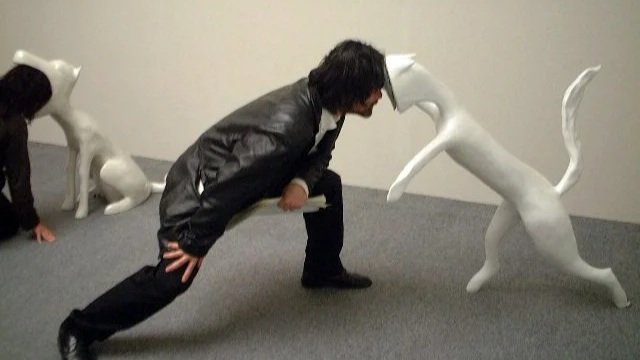
面對面 Face to Face" / fiber glass, LCD monitors, VCD players and speakers, various size / 2001
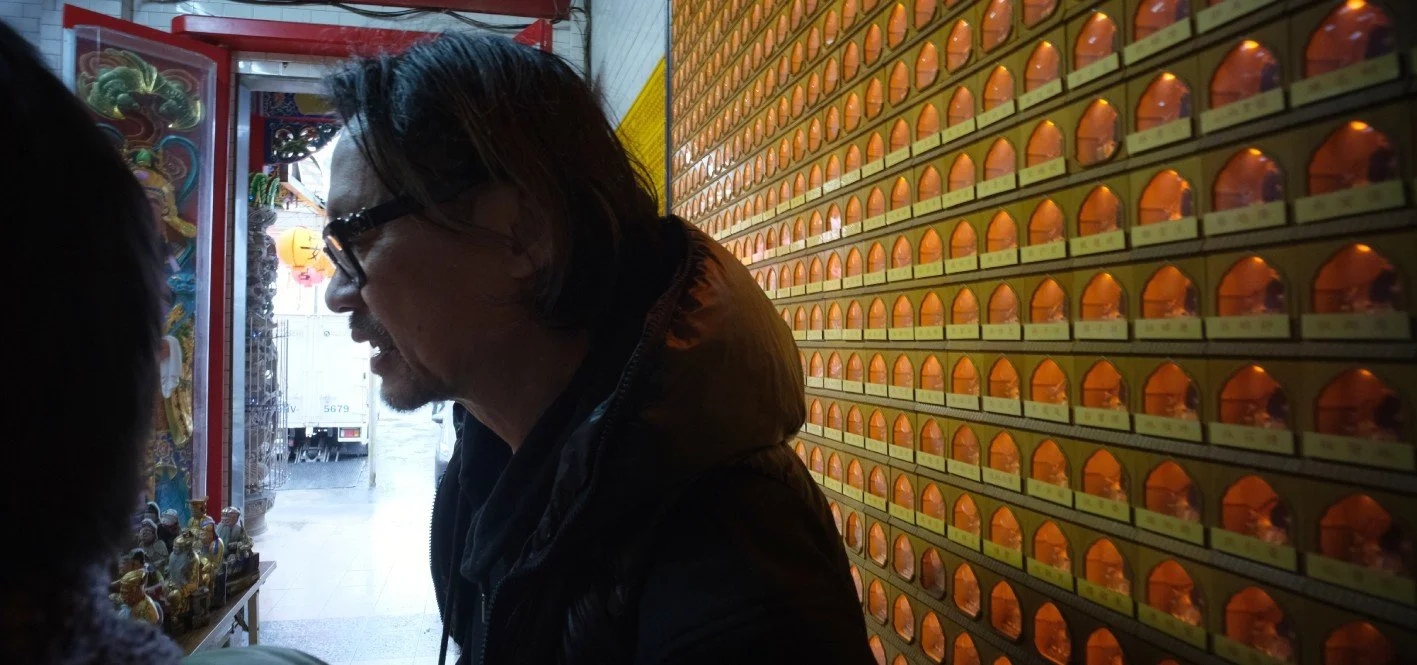
彭弘智
彭弘智是一位活躍於台灣與國際當代藝術界的跨媒材藝術家,1969年出生於台北市,籍貫為桃園楊梅。他於1992年畢業於國立台灣師範大學美術系,1997年取得美國舊金山藝術學院碩士學位,之後展開豐富的創作與展覽生涯,作品涵蓋錄像、裝置、雕塑、水墨、油畫、3D列印等多種形式。
彭弘智的創作核心關注宗教、文化、權力與身份的交錯關係,擅長運用幽默與象徵手法,挑戰觀者對社會結構與信仰體系的既定認知。他著名的《犬僧系列》作品中,透過狗的形象書寫宗教經文,探討神性與動物性之間的界線與轉換。其創作融合東西方文化元素,透過多重媒材與符號的交錯運作,呈現對當代社會與人類處境的深層反思。
在近期創作計畫《未完成之作》中,彭弘智以台灣劇場史中早逝創作者所留下的「未完成」為出發點,將其轉化為一種創作方法。他透過靈媒訪談與觀落陰等儀式性結構,嘗試與已故劇場導演建立一種跨越生死的對話關係,並將此一過程轉譯為影像、裝置與表演的複合創作機制。作品結合民俗和跨領域合作,使缺席的創作者得以透過代理與再敘事重新進入當代創作現場,進一步探討作者性、記憶與創作延續的可能性。該計畫獲得國家文化藝術基金會支持。
彭弘智的作品曾於伊斯坦堡、光州、釜山、福岡、台北等地的雙年展展出,並於歐洲、美國、中國等地舉辦個展與聯展。他曾獲第五屆台新藝術獎視覺藝術類首獎,作品並為多家國內外美術館與藝術機構收藏。
Hung-Chih Peng
Hung-Chih Peng is a multidisciplinary artist active in both Taiwan and the international contemporary art scene. Born in Taipei in 1969, with ancestral roots in Yangmei, Taoyuan, he received his BFA from National Taiwan Normal University in 1992 and his MFA from the San Francisco Art Institute in 1997. Since then, he has developed an extensive artistic and exhibition practice spanning video, installation, sculpture, ink painting, oil painting, and 3D printing.
Peng’s work centers on the intersections of religion, culture, power, and identity. He frequently employs humor and symbolic strategies to challenge established perceptions of social structures and belief systems. In his well-known Canine Monk Series, he uses canine figures to inscribe religious scriptures, exploring the shifting boundary between the sacred and the animal. His practice integrates elements from both Eastern and Western traditions, and through the interplay of multiple media and symbolic forms, offers a critical reflection on contemporary society and the human condition.
In his recent project Psychic Theatre, Peng takes as his point of departure the “unfinished” works left behind by prematurely deceased figures in Taiwanese theatre history, transforming them into a methodological approach to artistic creation. Through ritual structures such as mediumistic interviews and guan-luo-yin practices, “dialogue with the deceased” he seeks to establish a dialogic relationship across the boundary between life and death. This process is translated into a composite creative framework encompassing video, installation, and performance. By incorporating vernacular religious practices and cross-disciplinary collaboration, the project enables absent creators to re-enter the contemporary artistic field through mediation and re-narration, while further examining questions of authorship, memory, and the continuity of creative practice. The project is supported by the National Culture and Arts Foundation.
Peng’s work has been presented in biennials in Istanbul, Gwangju, Busan, Fukuoka, and Taipei, and he has exhibited widely in Europe, the United States, and China. He received the Grand Prize in the Visual Arts category at the 5th Taishin Arts Award, and his works are held in the collections of numerous museums and art institutions in Taiwan and internationally..
攝影: 一布伊 Portrait by Ibuyi
近期活動 Most Recent
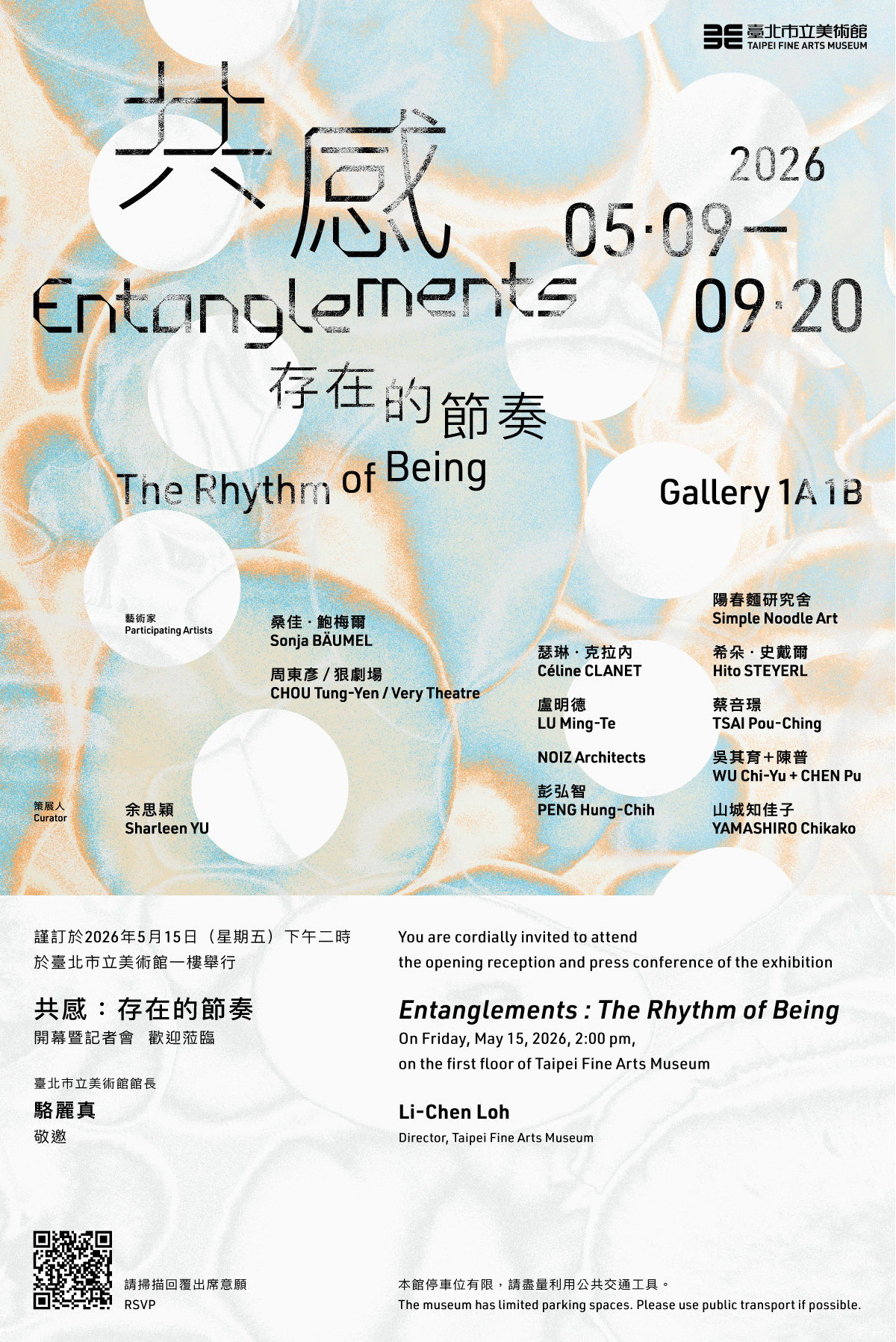
Entanglements- The Rhythm of Being
2025/08/09 - 2025/11/16
台北市立美術館 Taipei Fine Arts Museum
策展人: 余思穎 Curator: Sharleen Yu
參展藝術家
Participating Artists
桑佳•鮑梅爾
Sonja BAUMEL
周東彥/狠劇場
CHOU Tung-Yen / Very Theatre
瑟琳•克拉內
Céline CLANET
盧明德
LU Ming-Te
NOIZ Architects
彭弘智
PENG Hung-Chih
陽春麵研究舍
Simple Noodle Art
希朵•史戴爾
Hito STEYERL
蔡音璟
TSAI Pou-Ching
吳其育+陳普
WU Chi-Yu + CHEN Pu
山城知佳子
YAMASHIRO Chikako
Works in This Group Exhibition: 面對面 Face to Face
Works in This Group Exhibition: "神明收容所" / “God Pound”
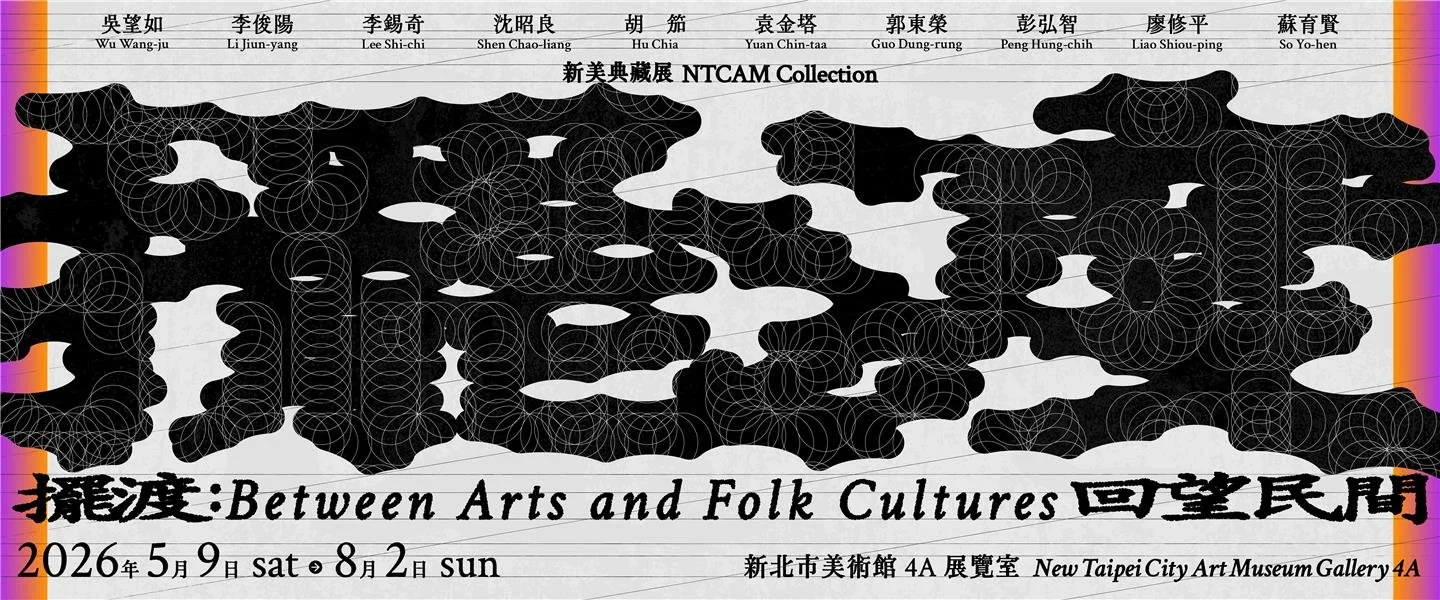
NTCAM Collection: Between Arts and Folk Cultures
2026-05-09 — 2026-08-02
參展藝術家
吳望如
李錫奇
李俊陽
沈昭良
胡笳
郭東榮
袁金塔
彭弘智
廖修平
蘇育賢
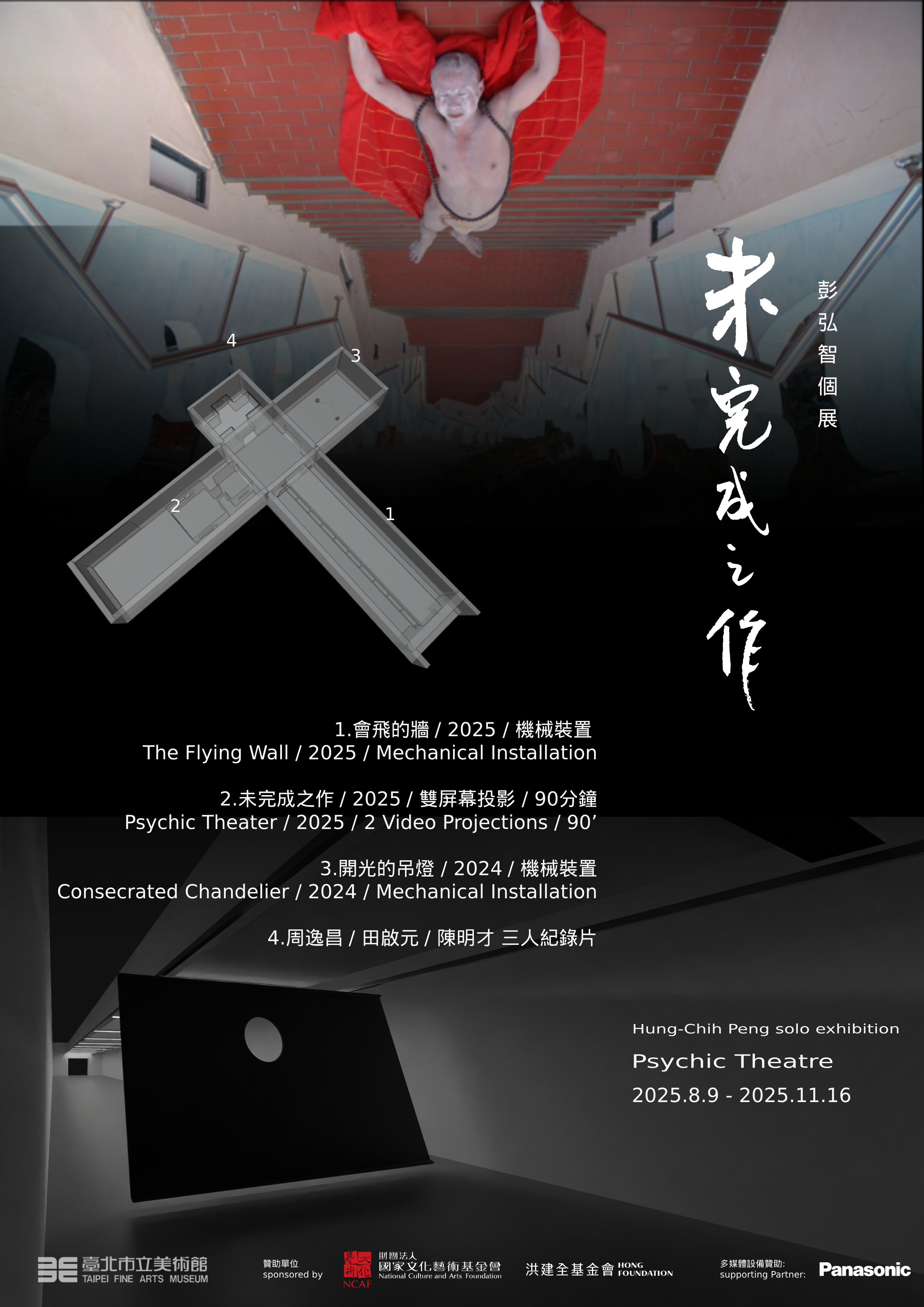
Psychic Theater: Hung-Chih Peng Solo Exhibition
2025/08/09 - 2025/11/16
台北市立美術館 Taipei Fine Arts Museum
策展人: 余思穎 Curator: Sharleen Yu
本次個展聚焦在他近期的跨領域嘗試:劇場界有許多已逝或英年早逝的英才,例如:田啟元(1964-1996)、陳明才(1961-2003)、周逸昌(1948-2016)等。他們對台灣的劇場界都有深遠的影響,都是開拓者的角色,可惜好像有很多應該接下來要完成的作品或事業沒有 辦法完成就離開了。他非常渴望知道這些英年早逝的英才是否有所遺憾,是不是有未完成的作品想要幫忙繼續完成?所以思考是不是經由靈媒或觀落陰的方式可以把他們找出來,問他們有沒有要完成的劇本或故事,讓我們還在現世的後輩可以幫忙完成。一開始是黑白的紀錄片,記錄著探訪靈媒的過程,問這些靈媒他們三位有沒有未完成的作品。並且跟這三位亡靈討論這個作品要如何繼續發展,後面是彩色的影片,依據訪談後結果的一個表演作品。這是跟逝去亡靈的共同合作,最後根據他們所想要做的來完成一個新的電影和裝置。
This solo exhibition focuses on his recent cross-disciplinary experiments: Taiwan’s theatre history is marked by the early loss of visionary artists such as Tien Chi-Yuan (1964–1996), Chen Ming-Tsai (1961–2003), and Chou Yi-Chang (1948–2016). Each left a profound legacy, yet their sudden departures left many dreams and works unfinished. This project arises from a longing to ask: Do they have regrets? Were there stories they still hoped to tell? Through spiritual mediums and the traditional ritual of Guan Luo Yin, Peng seek to reconnect with these departed artists. The film begins as a black-and-white documentary, capturing his search for mediums and conversations with the spirits, asking what works remain incomplete and how they might continue. The second half transforms into color—a performance created in collaboration with the spirits themselves. Based on the messages received, Peng carry out their imagined intentions, crafting a new video piece that blurs the line between memory, imagination, and the afterlife. This is a dialogue across realms—a continuation of art beyond death.