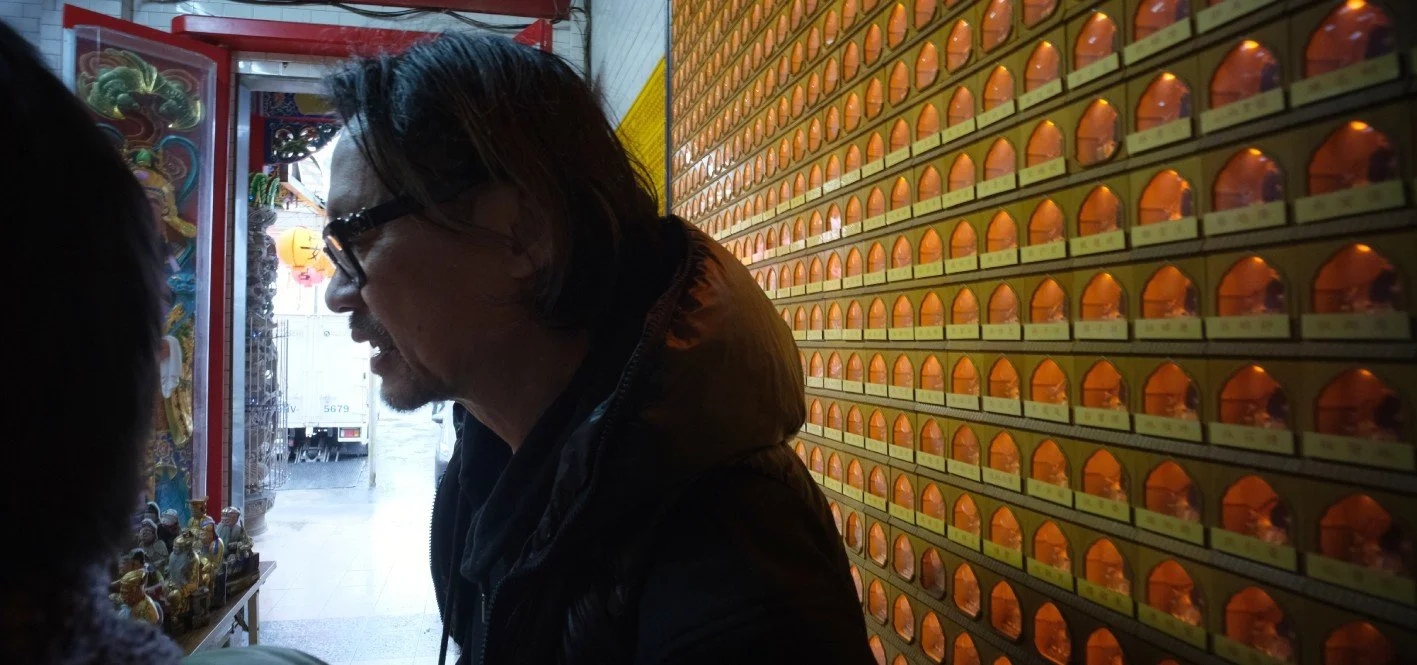
彭弘智
彭弘智是一位活躍於台灣與國際當代藝術界的跨媒材藝術家,1969年出生於台北市,籍貫為桃園楊梅。他於1992年畢業於國立台灣師範大學美術系,1997年取得美國舊金山藝術學院碩士學位,之後展開豐富的創作與展覽生涯,作品涵蓋錄像、裝置、雕塑、水墨、油畫、3D列印等多種形式。
彭弘智的創作核心關注宗教、文化、權力與身份的交錯關係,擅長運用幽默與象徵手法,挑戰觀者對社會結構與信仰體系的既定認知。他著名的《犬僧系列》作品中,透過狗的形象書寫宗教經文,探討神性與動物性之間的界線與轉換。其創作風格融合東西方文化元素,透過多重媒材與符號的交錯,呈現對當代社會與人類處境的深刻反思。
在近期的創作計畫《未完成之作》中,彭弘智邀請靈媒與已故台灣劇場前輩進行跨界對話,結合文獻研究、錄像、裝置與表演藝術,跨越生死界線,探討創作與記憶的延續性。該計畫獲得國家文化藝術基金會支持。
彭弘智的作品曾於伊斯坦堡、光州、福岡、台北等地的雙年展展出,並在歐洲、美國、中國等地舉辦個展與聯展。他曾獲得第五屆台新藝術獎視覺藝術類首獎,作品被多家國內外美術館與藝術機構收藏。
Hung-Chih Peng
Peng is an interdisciplinary artist active in both Taiwan and the international contemporary art scene. Born in Taipei in 1969, with family roots in Yangmei, Taoyuan, he graduated from the Department of Fine Arts at National Taiwan Normal University in 1992 and received his MFA from the San Francisco Art Institute in 1997. Since then, he has developed a prolific creative and exhibition career, working across diverse media including video, installation, sculpture, ink painting, oil painting, and 3D printing
Peng’s artistic practice explores the complex intersections of religion, culture, power, and identity. Known for his use of humor and symbolism, he challenges established perceptions of social structures and belief systems. In his renowned “Canine Monk” series, he employs the image of a dog to transcribe religious scriptures, probing the boundaries and transformations between divinity and animality. Blending Eastern and Western cultural elements, his multilayered use of media and symbols articulates a profound reflection on contemporary society and the human condition
In his recent project “Psychic Theatre”, Peng collaborates with spirit mediums to engage in transdisciplinary dialogues with deceased pioneers of Taiwanese theater. Integrating archival research, video, installation, and performance, the project crosses the boundary between life and death to investigate the continuity of memory and creation. The project is supported by the National Culture and Arts Foundation
Peng’s works have been featured in biennales in Istanbul, Gwangju, Fukuoka, and Taipei, and he has held solo and group exhibitions across Europe, the United States, and China. He received the First Prize in the Visual Arts category at the 5th Taishin Arts Award, and his works are collected by numerous art institutions both in Taiwan and abroad.
攝影: 一布伊 Portrait by Ibuyi