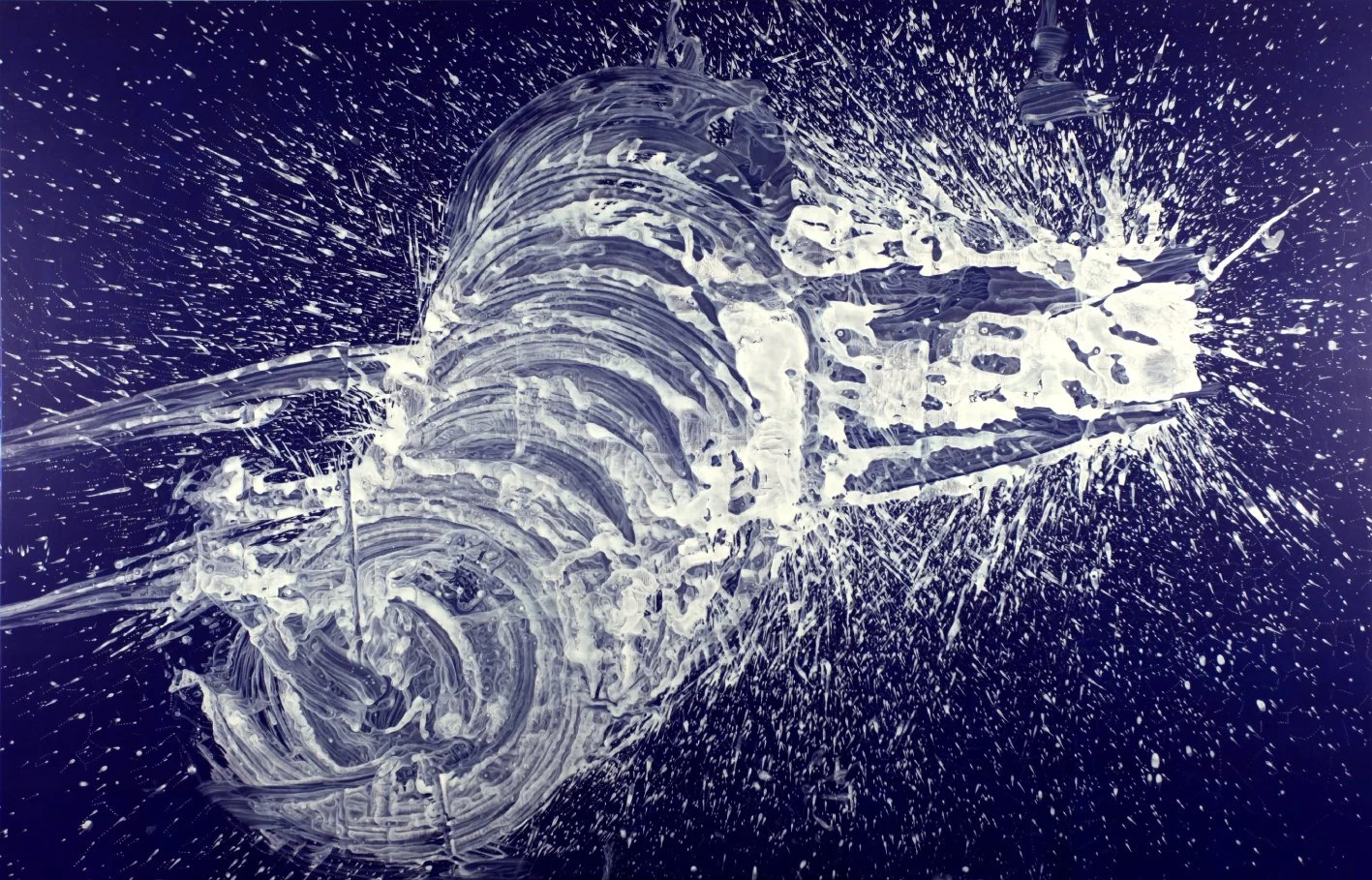
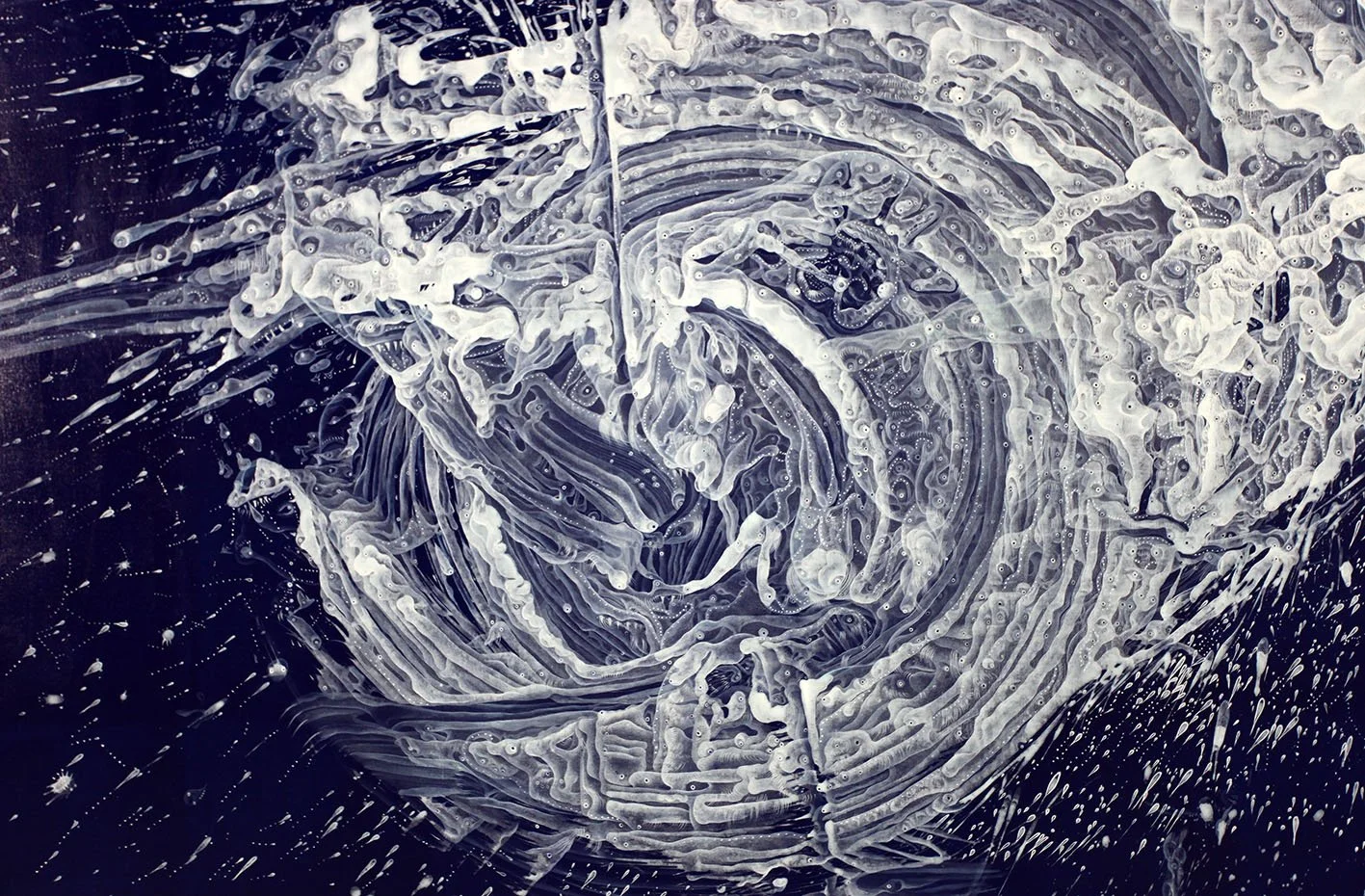
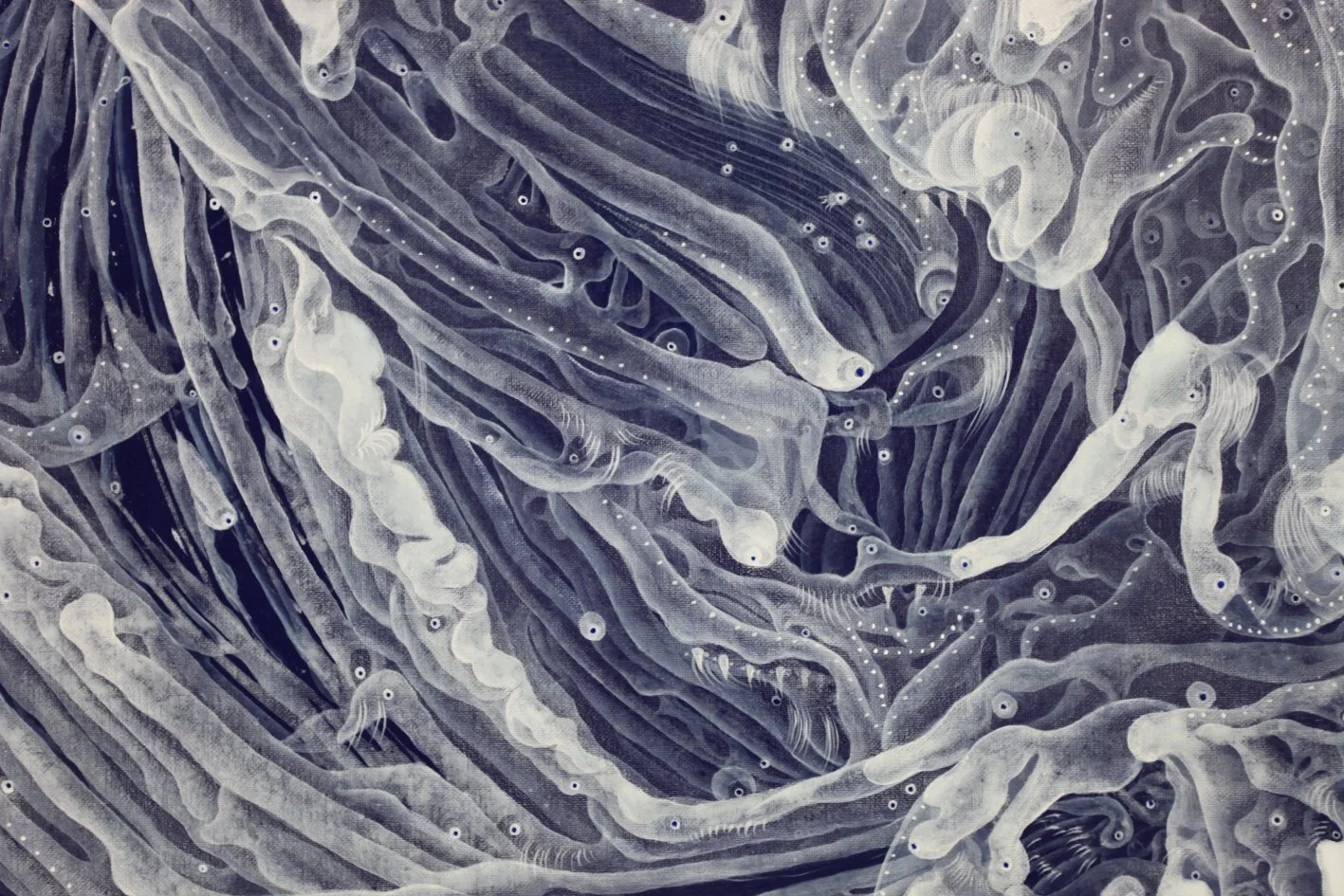
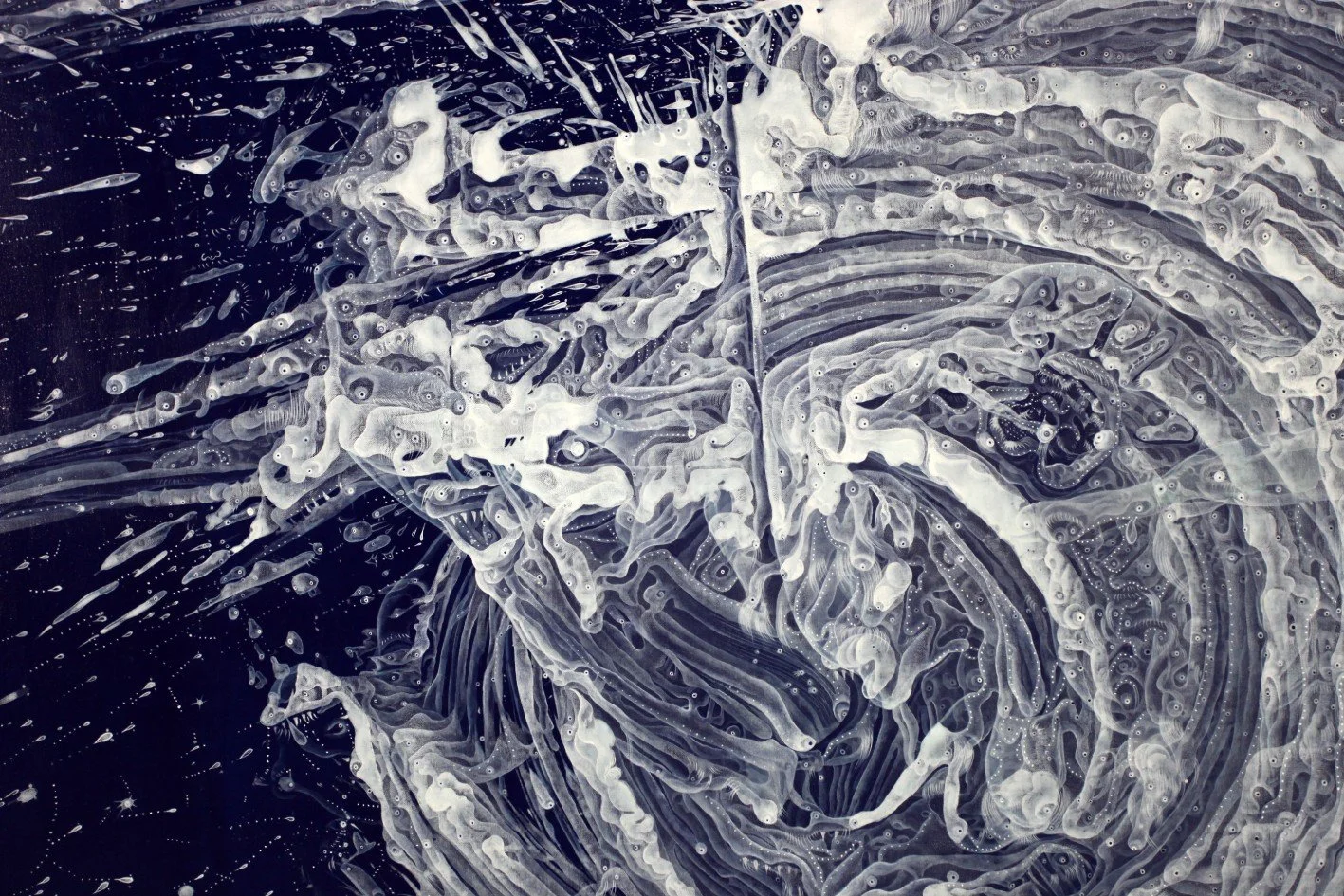
後內經圖 - 霹靂 / 油畫, 壓克力, 畫布 / 296x193 cm / 2016
Post - Inner Scripture / Oil and Acrylic on Canvas / 296x193 cm / 2016
古老的內經圖(Inner Scripture)是一種描繪人體氣血循環與能量運行的圖式結構,長期以來作為道教修煉者進行冥想與養生實踐的身體導引圖譜。此圖並非單純的醫學或解剖學示意,而是一種結合宇宙論、身體觀與靈性修持的內在地景。
以《內經圖》為創作方法論與觀念基礎,我邀請觀者透過行動繪畫(action painting)的方式,將顏料潑灑或滴落於畫布之上,使身體動作直接介入畫面的生成。隨後沿著顏料流動所留下的痕跡,發展出完整的輪廓線條與造形結構,賦予影像一種強烈且帶有意志性的視覺秩序。最終形成的繪畫,不再是單一主體的產物,而是一種經由觀者參與所共同構成的主觀性圖像。
在與觀者之間的即興互動中,繪畫成為一種能量交換與生成的場域,承載著雙方內在宇宙與生命本質的流動。此一過程同時構成對《內經圖》觀念的當代轉譯——將古老的修煉圖式轉化為身體行動與感知經驗的實踐,使觀者得以重新思考中國思想中廣袤而深層的靈性哲學。
彭弘智
The ancient Nei-jing-Tu (Inner Scripture Diagram) is a schematic representation of the circulation of blood, qi, and energetic flows throughout the human body. Historically, it has functioned as a somatic map for Daoist practitioners, guiding meditation, self-cultivation, and techniques of bodily nourishment. Rather than serving merely as a medical or anatomical illustration, the diagram constitutes an interior landscape—one that interweaves cosmology, corporeality, and spiritual discipline.
Taking the Inner Scripture Diagram as both a methodological and conceptual foundation, I invite viewers to engage in action painting by spilling or dripping pigment onto the canvas, allowing bodily gestures to intervene directly in the formation of the image. Following the traces left by the movement of paint, I subsequently develop contour lines and structural forms, endowing the composition with a deliberate and willful visual order. The resulting painting thus ceases to be the product of a single subject; instead, it emerges as a subjective image co-constructed through the participation of the viewer.
Through this improvisational exchange between myself and the viewer, painting becomes a site of energetic circulation and generative encounter, carrying the flows of our respective inner universes and vital essences. This process operates as a contemporary reinterpretation of the Inner Scripture Diagram, transforming an ancient diagram of cultivation into a lived practice of bodily action and perceptual experience. In doing so, it opens a space for viewers to contemplate the expansive and deeply rooted spiritual philosophies embedded within Chinese thought.
Hung-Chih Peng