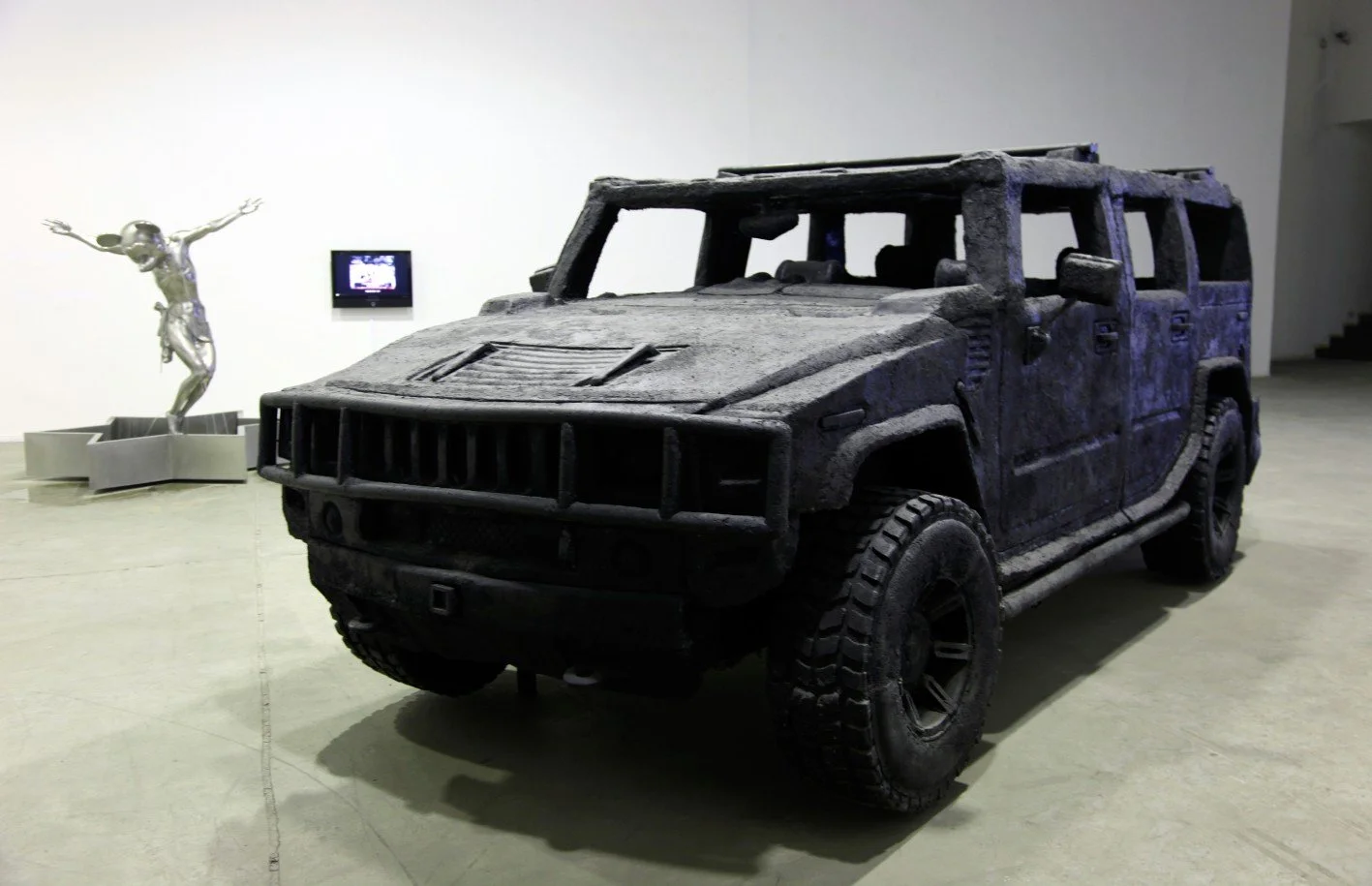
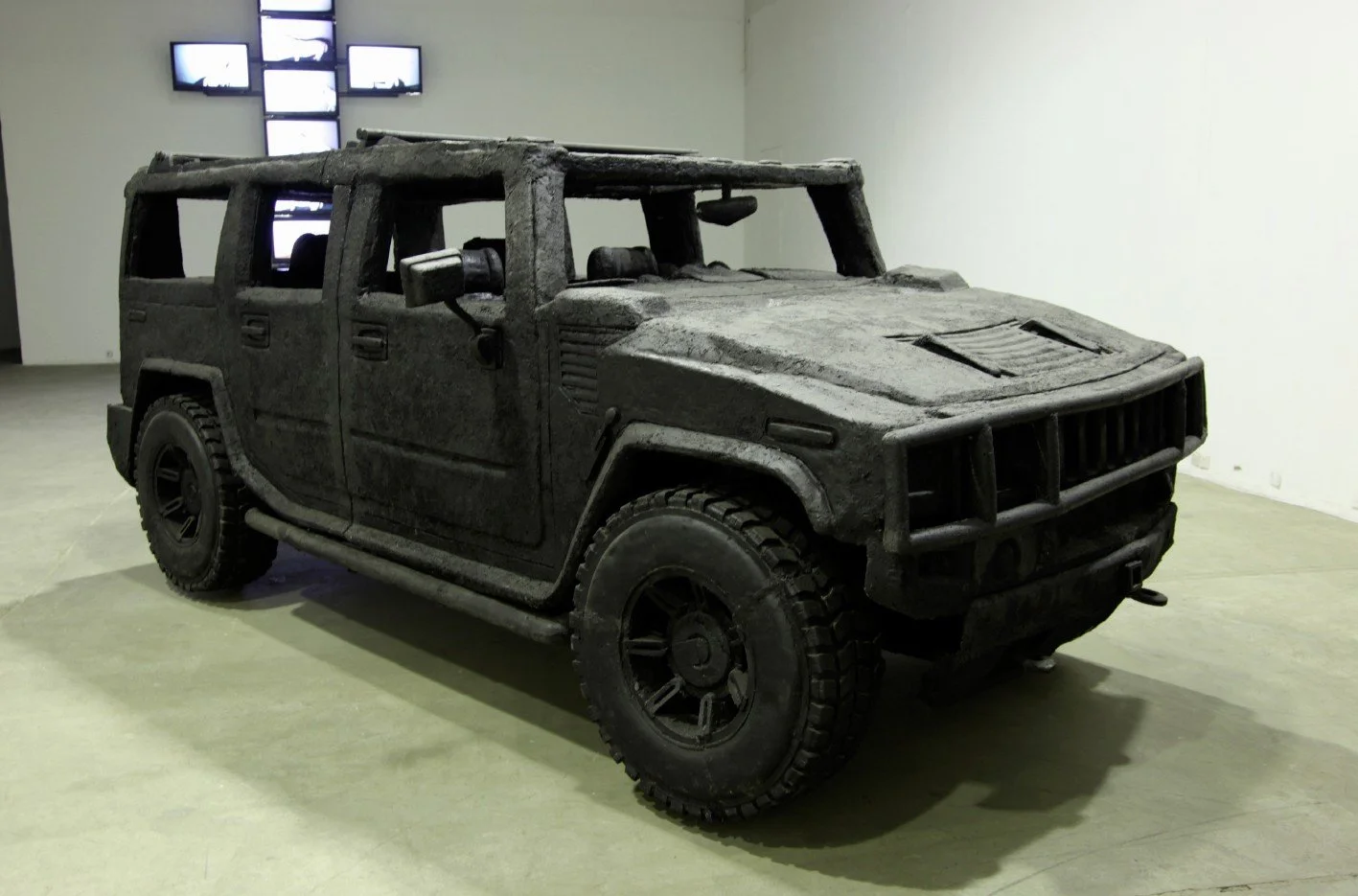
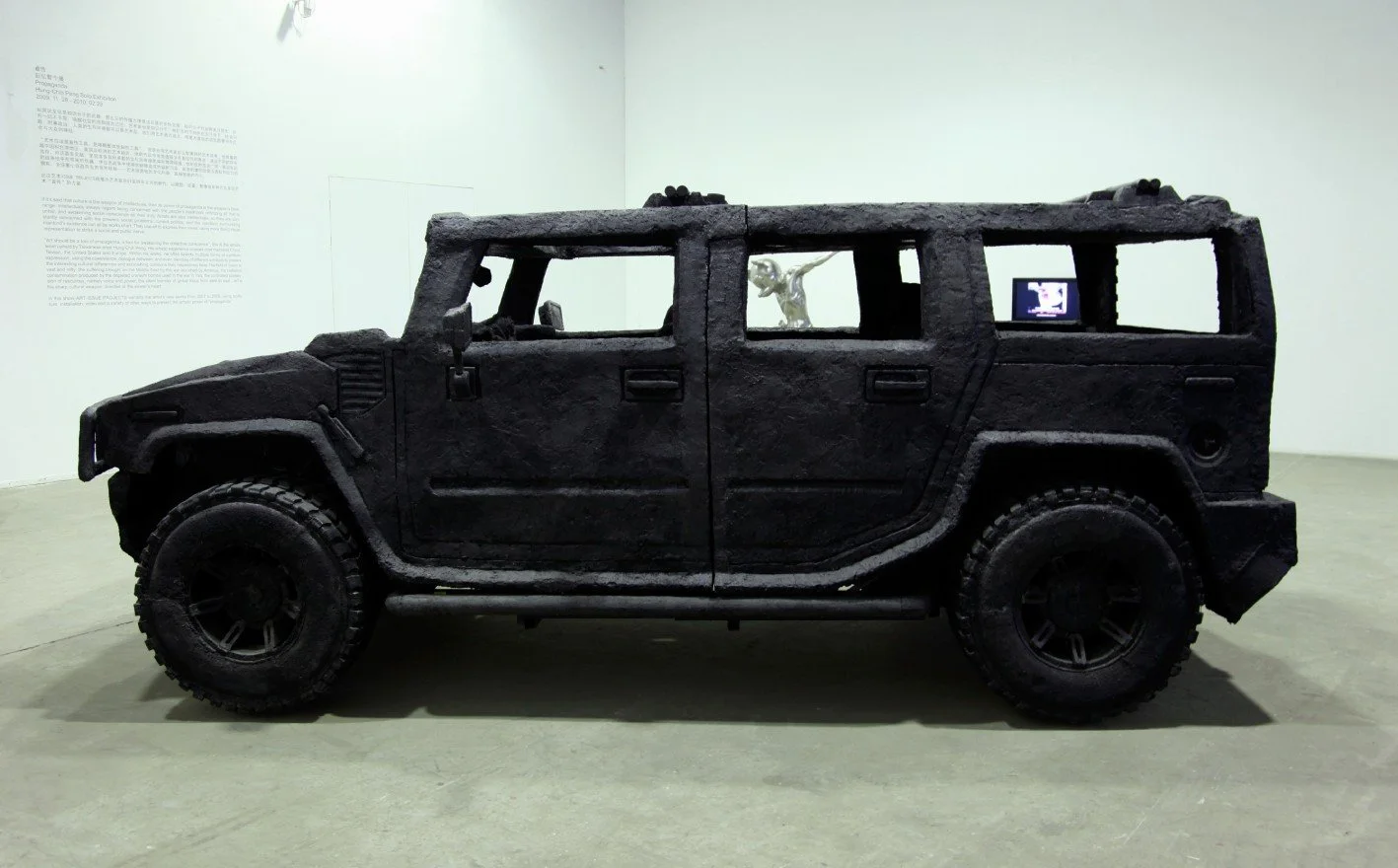
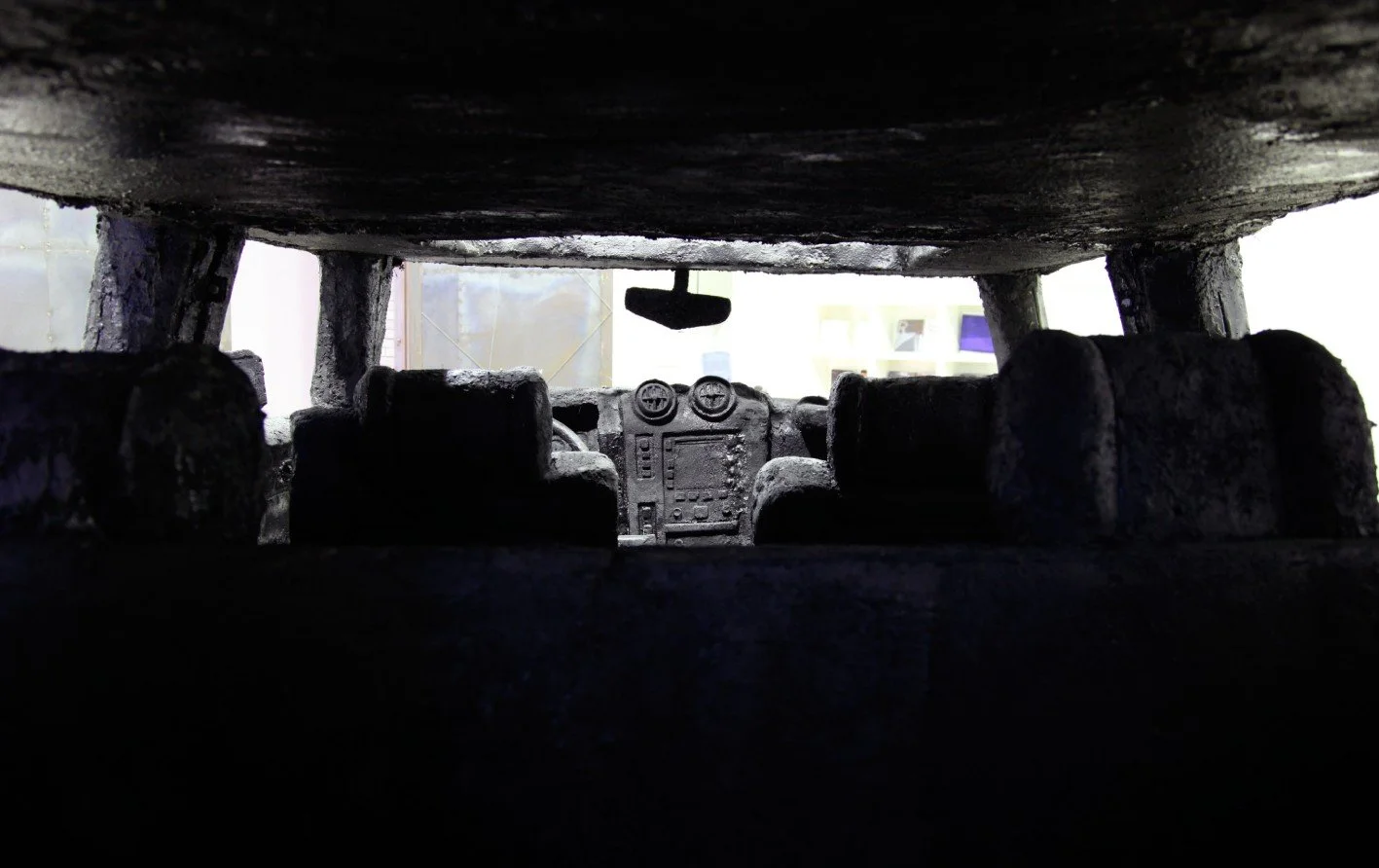
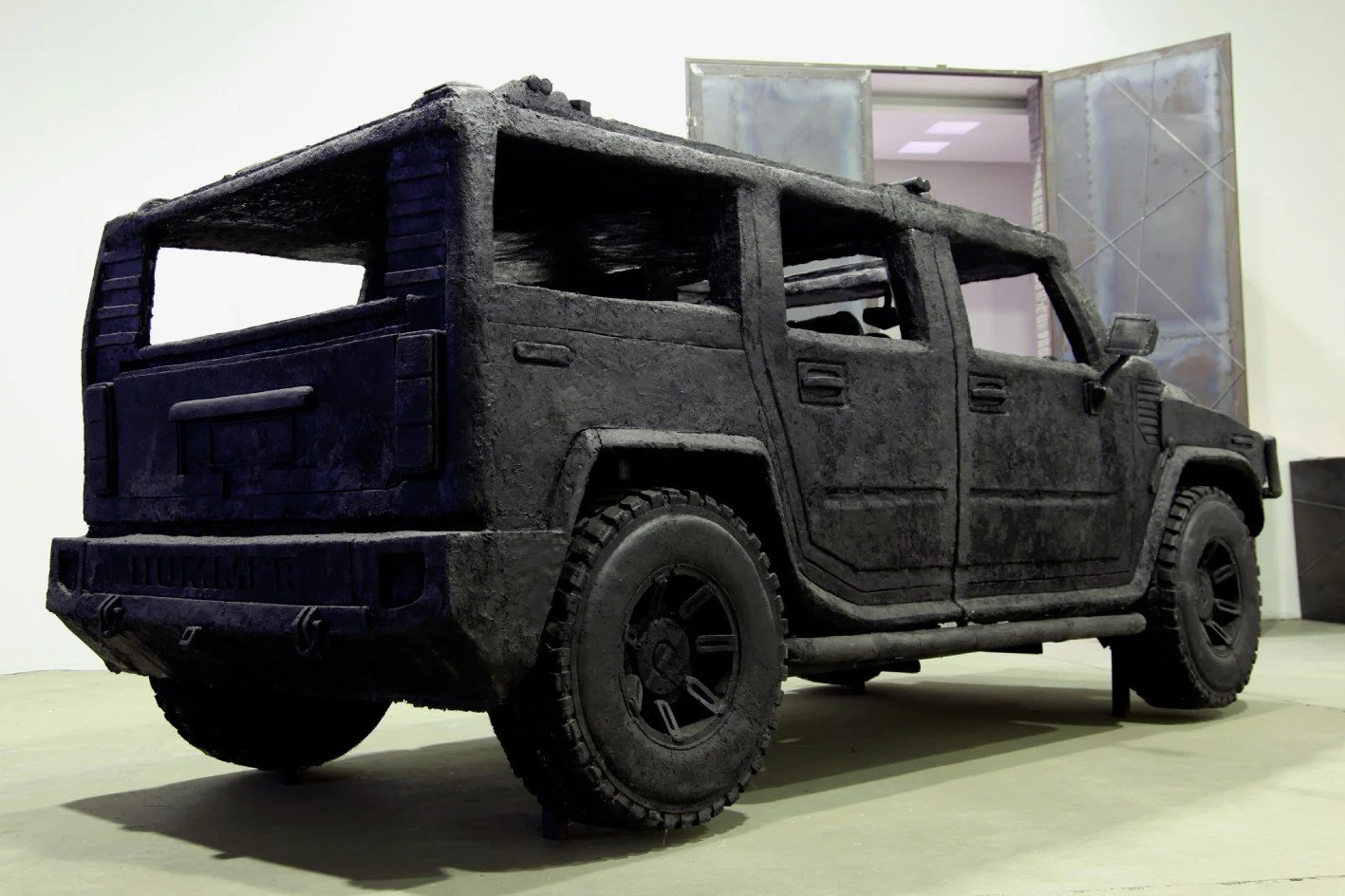
"煤炭做的悍馬" / 煤,玻璃鋼,鐵架 / 200(H)×230(W)×480(L)cm / 2009
"Hummer Made of Coal " / Coal, Fiber Glass, Metal Frame / 200(H)×230(W)×480(L)cm / 2009
一輛以煤渣翻製而成、原比例尺寸的悍馬車靜置於空間之中。黝黑而龐大的身軀沉重如礦石,彷彿將內在的爆炸力與能量壓縮其中。煤——這種最原始的化石燃料——在此取代石油,成為車體的物質基礎,也揭露了現代文明對能源的深層依賴與暴力本質。
作為美國軍工體系的產物,悍馬誕生於1980年代 AM General 承接軍方訂單之際,並在波灣戰爭後轉化為民用與消費主義的權力象徵。其龐大體積與高度耗油,使速度、征服與佔有成為一種日常姿態,也暗示國家以民主與戰爭之名對全球能源的掠奪。
當這具象徵石油政治的車體最終被中國資本收購,煤與油、戰爭與市場、崛起與衰退在此交錯碰撞。作品透過材料的置換與歷史的反諷,揭示兩個能源大國之間鏡像般的權力邏輯,指向一種並無本質差異的大國心態。
彭弘智
A life-size Hummer H2 cast from coal slag stands motionless in the space. Its dark, massive body, dense as ore, appears to compress an inner force of combustion and energy. Coal—among the most primordial fossil fuels—replaces petroleum as the vehicle’s material substrate, exposing modern civilization’s dependence on extraction and the latent violence embedded in energy consumption.
Produced within the U.S. military-industrial system by AM General in the 1980s and popularized after the Gulf War, the Hummer shifted from battlefield utility to a civilian emblem of power and consumerism. Its excessive scale and fuel appetite normalize speed, conquest, and possession, while alluding to resource acquisition conducted in the name of democracy and war.
Acquired later by Chinese capital, the vehicle becomes a site where coal and oil, war and market, rise and decline collide. Through material substitution and historical irony, the work reflects the mirrored logics of two energy superpowers, revealing their fundamentally shared will to power.
Hung-Chih Peng
攝影: 彭弘智 photo: Hung-Chih Peng